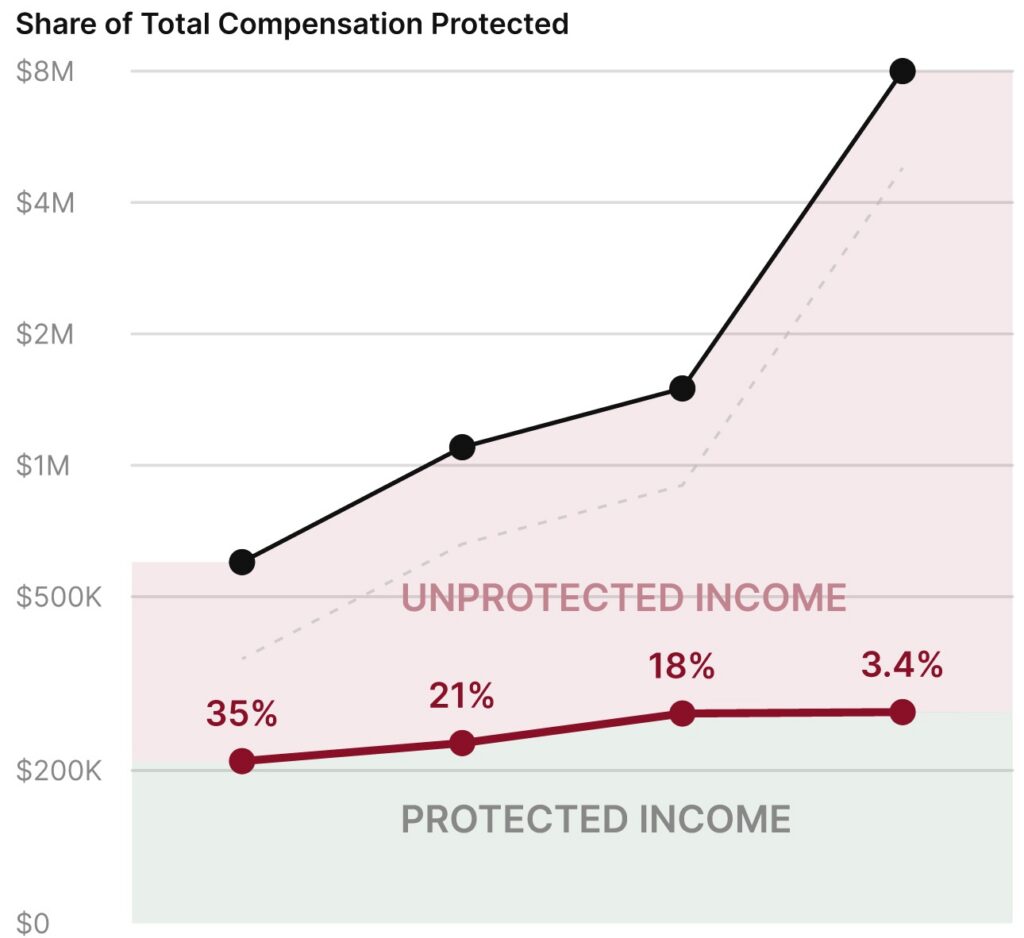

A first-year associate buying disability insurance is pricing a policy against the person they are today, not the partner they expect to become. That distance widens for decades, as income grows in ways the original policy was never adjusted to match. Whether a policy bought early in a legal career still protects the income that career eventually produces comes down to that single detail.
Disability insurance for lawyers usually gets framed as a single purchase decision made once, at one moment. It is actually two decisions, made at two different moments years apart, and most buyers only make the first one.
Ethan F. Abramowitz, a disability insurance attorney at Seltzer and Associates, represents professionals at every point in that arc, from associates weighing whether to buy at all to partners discovering what a decade-old policy actually still covers.
Early in a Legal Career, the Odds Favor Buying Disability Coverage Now
The argument for buying coverage as a young associate is not that disability is likely in any given year. It is that the odds compound over an entire working lifetime, longer than most people intuitively price against.
“Social Security statistics say 25% of young professionals entering the workforce will not reach retirement age before they meet the Social Security definition of disability.”
Ethan F. Abramowitz, attorney at Seltzer and Associates
A one-in-four odds statistic, the same figure the Social Security Administration publishes in its own disability data, is easy to hear and hard to feel at 26, which is exactly the age premiums are lowest and health underwriting is easiest to clear. An associate who waits until making partner to shop for coverage is pricing the same policy against ten or fifteen more years of age and health history, if the policy is still obtainable at all.
That first decision, buy now or wait, only ever gets made correctly once. A lawyer who delays through their twenties assuming there will be time later is not deferring the decision, they are making it on worse terms without realizing one has been made.
A Future Increase Option Rider Has to Still Work Decades Later
The second decision matters just as much and gets made far less deliberately, whether the benefit itself grows with a career or sits flat for as long as the policy is held.
“You’re looking at 25 or 30 years of disability benefits that stay stagnant if you do not have a cost of living adjustment.”
Ethan F. Abramowitz, attorney at Seltzer and Associates
A monthly benefit set at the income of a 30-year-old associate and never adjusted is worth less every year it goes untouched, both against inflation and against the income the same lawyer is earning by the time a claim is filed, the identical shortfall that opens when a group plan was never built to grow with a career. Two riders address the two different halves of that problem.
A cost of living adjustment increases the monthly benefit once a claim is already being paid, protecting purchasing power during a long-term claim. A future increase option does the opposite work before any claim exists. It lets a lawyer raise the benefit amount as income rises over a career, without new medical underwriting, so the insurability locked in at the healthiest point in a working life is still there to use decades later.
The mechanism behind that promise, including what happens if a lawyer’s group LTD, employer-provided group long-term disability coverage, disappears, is not the same from carrier to carrier.
Future Increase Option Mechanics, by Carrier
| Carrier | How the increase is triggered | Underwriting required | Age cutoff |
|---|---|---|---|
| Guardian, Future Increase Option Rider (Guardian sample contract) | Client applies during a 63-day window around each policy anniversary, or a 90-day window opened by losing group LTD coverage | Financial underwriting only, no medical exam | Full amount through age 45, then up to one-third of the original increase amount from age 45 on |
| Ameritas, Future Increase Option Rider (Ameritas sample policy) | Client applies within 31 days before or after each policy anniversary, up to one-half the original base monthly benefit per election, or within 90 days of losing group LTD coverage that is not replaced or of a permanent 30 percent income increase, at age 45 or younger | Financial underwriting only, no medical exam | Increases allowed through the policy anniversary at age 55, when the rider ends |
| The Standard, Automatic Increase Benefit Rider (Standard sample policy) | Increases apply automatically with no application, then the benefit can be renewed for a further increase period | Financial underwriting required only at renewal | Renewal requires being under age 60 |
All three rows link to the actual specimen contracts hosted on this site. Terms vary by state and policy series, so confirm current language at quoting time.
Guardian goes a step further and builds a rider specifically for the moment a lawyer’s group coverage disappears. A client who loses group LTD coverage can size a future increase purchase to the group amount just lost, discounted 30 percent, so the individual policy can grow the moment the group plan disappears.
Neither rider retroactively fixes a policy bought without one. Both are decisions made once, early, the same way the decision to buy coverage at all is made once, and both are far easier to add at 30, healthy and just starting to earn, than at 45 with a decade of medical history attached.
The Two Decisions Belong to Different Moments in Lawyers’ Careers
Whether coverage is even a lawyer’s own to adjust is a separate question a firm-provided plan rarely answers cleanly, since an employer-owned policy can be modified or reduced in ways an individual one cannot. That ownership question sits alongside, not inside, the two decisions this article is about, and it is worth its own separate look at what happens when the policy paying a claim was never the lawyer’s to control before assuming a firm’s plan already handles what an individual policy would.
Buying young answers the first question, whether coverage exists at all while it is cheapest and easiest to obtain. A future increase option before any claim, paired with a cost of living adjustment during one, answers the second, whether coverage bought at 30 still means something at 60. Treating them as one decision is how a policy ends up technically in force and practically inadequate.
A first-year associate rarely has both questions in front of them at once. The first is obvious the moment a paycheck starts arriving. The second only becomes obvious once enough years have passed that the original benefit amount looks small next to everything else that has grown, and by then the easiest window to fix it has usually already closed.