
Analisa Cleland is my sister. Insurance has been our family’s business for three generations.
Tracy Williams made equity partner at Sidley Austin, and a denied claim on her firm’s group disability plan put her in a legal fight with the carrier.
In my experience, most attorneys don’t ask which body of law governs that fight. Income protection for law firm attorneys, which are policies they could own individually instead of through their firm never gets bound.
For group LTD policies, the Employee Retirement Income Security Act of 1974, a federal statute that narrows what a judge may second-guess, omits the remedies that state insurance law gives policyholders and starts a 180-day clock from the day of the denial.
Williams did not stop practicing law entirely. Her claim was for a partial disability, meaning reduced capacity to practice rather than a complete stop, after Covid-19 disabled her in 2022 and her earnings fell 20% the following year.
She sued Metropolitan Life Insurance Company after it denied the group claim, according to this Bloomberg Law article.
What a group plan pays and how a dispute over it gets decided are two separate things, and a denied claim is what decides into both.
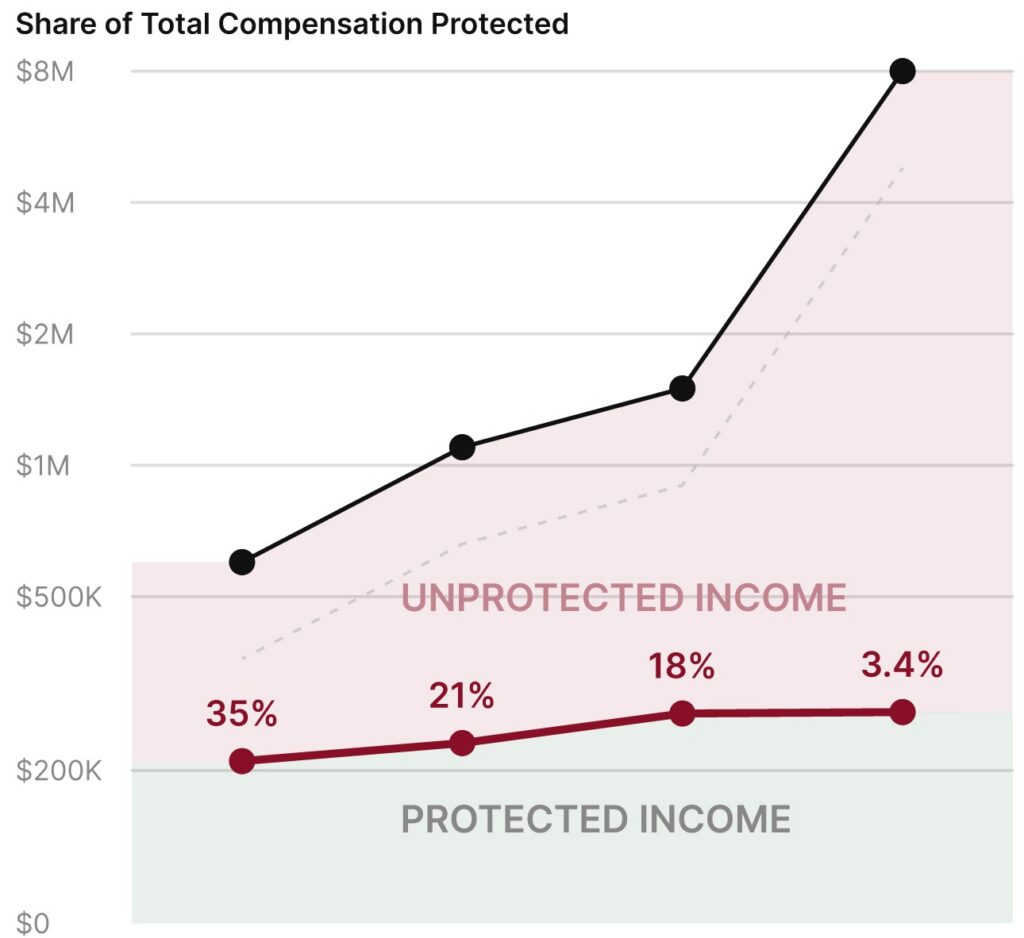
A firm’s group long term disability plan calculates benefits against base salary and drops its own-occupation standard, the promise to pay while an attorney cannot practice law specifically, at month 24, which is the income shortfall a law firm’s group plan builds in.
Disability Insurance for Lawyers Turns on Which Law Governs a Denial
The reason a denied group claim is so hard to reverse has little to do with the medicine in the file. Group long-term disability sits under ERISA, while an individually owned policy answers to the state insurance code, which lets a policyholder sue for bad faith, meaning a claim handled unreasonably can cost the carrier more than the benefit it withheld.
Ethan F. Abramowitz, a disability insurance attorney at Seltzer and Associates in Philadelphia, represents professionals in denied and disputed claims. He locates the difference in the statute rather than in the facts of any one case.
“Individual policies are governed by pure state insurance law, so there are bad faith components. Long-term disability is governed by ERISA, a federal statute that really shifts the burden and the scales in favor of the insurance company.”
Ethan F. Abramowitz, a disability insurance attorney at Seltzer & Associates in Philadelphia, on the Income Protection Journal Podcast
A court reviewing an ERISA denial often asks only whether the carrier’s decision was reasonable, not whether it was right. A carrier that documents a defensible reading of its own certificate can prevail on that narrow question while an attorney who genuinely cannot practice collects nothing.
The first deadline in that fight runs inside the carrier’s own appeal process. The federal ERISA claims-procedure regulation gives a claimant 180 days from the denial to file an internal appeal, a deadline written into the Code of Federal Regulations. Miss it, and the attorney can lose the right to sue at all.
Individual Disability Insurance for Attorneys Changes Who Controls the Claim
Ownership decides more than the size of the check. The firm buys the group contract, renews it each year and can reduce or cancel it, which leaves the attorney relying on coverage she never chose and cannot hold in place.
Brokers who place coverage for law firms see where those decisions land. Analisa Cleland, an independent insurance broker at Coto Insurance and Financial Services, has reviewed group plans for attorneys capped at a flat $2,000 a month.
“The group plan that we have covers up to $2,000. Well, most attorneys, that’s not going to help protect their income enough.”
Analisa Cleland, independent insurance broker at Coto Insurance and Financial Services
That figure is what Cleland has seen across the plans she reviews rather than an industry average, and no attorney covered by one of them picked the number. A ceiling the firm sets also raises whether the plan pays anything at all once someone is working reduced hours, which is the position Williams was in when she filed.
Tax treatment follows the same ownership line. Because the firm usually pays the premium with pre-tax dollars, the benefit arrives taxable, so a plan described as replacing 60 percent of income delivers less than that after withholding.
Andy Schafer, vice president of Workplace Benefits Solutions at Principal Financial Group and an actuary who spent 24 years pricing disability insurance risk, sees that post-tax number land from inside a carrier. The biggest shock for people on an employer-sponsored policy, in his account, comes when they go out on claim and learn how much lower the income replacement is than the salary they were used to.
A policy the attorney buys herself answers to her instead. It travels when she changes firms, pays a benefit funded with after-tax dollars so the money arrives tax-free, and puts any dispute under state insurance law, where bad-faith exposure gives a carrier a financial reason to pay rather than litigate. A policy she owns still has to keep pace with a growing income, a separate decision made later in a career.
For an attorney, the firm’s plan is a floor, not a finish. The move that protects a partner’s paycheck is to read the group certificate for its appeal deadline and its denial-review language rather than only its benefit table, then buy an individual policy while young and healthy enough to qualify. Which law decides a claim is settled years before anyone files one, on the day a lawyer chooses whether to rely on a contract the firm owns or one she owns herself.