
Disability Insurance for Veterinarians
Own Occupation Disability Insurance for Veterinarians
Income protection for veterinarians
True Own-Occupation Coverage for Every Practice Type
Veterinarian disability insurance replaces income when illness or injury ends hands-on clinical work. Disability insurance for veterinarians pays a non-cancellable, portable monthly benefit that follows a veterinarian through any change in employer or practice. Compare small-animal, large-animal, and practice-owner coverage side by side, with own-occupation protection delivered as base language, a definition choice, or a rider depending on the carrier.
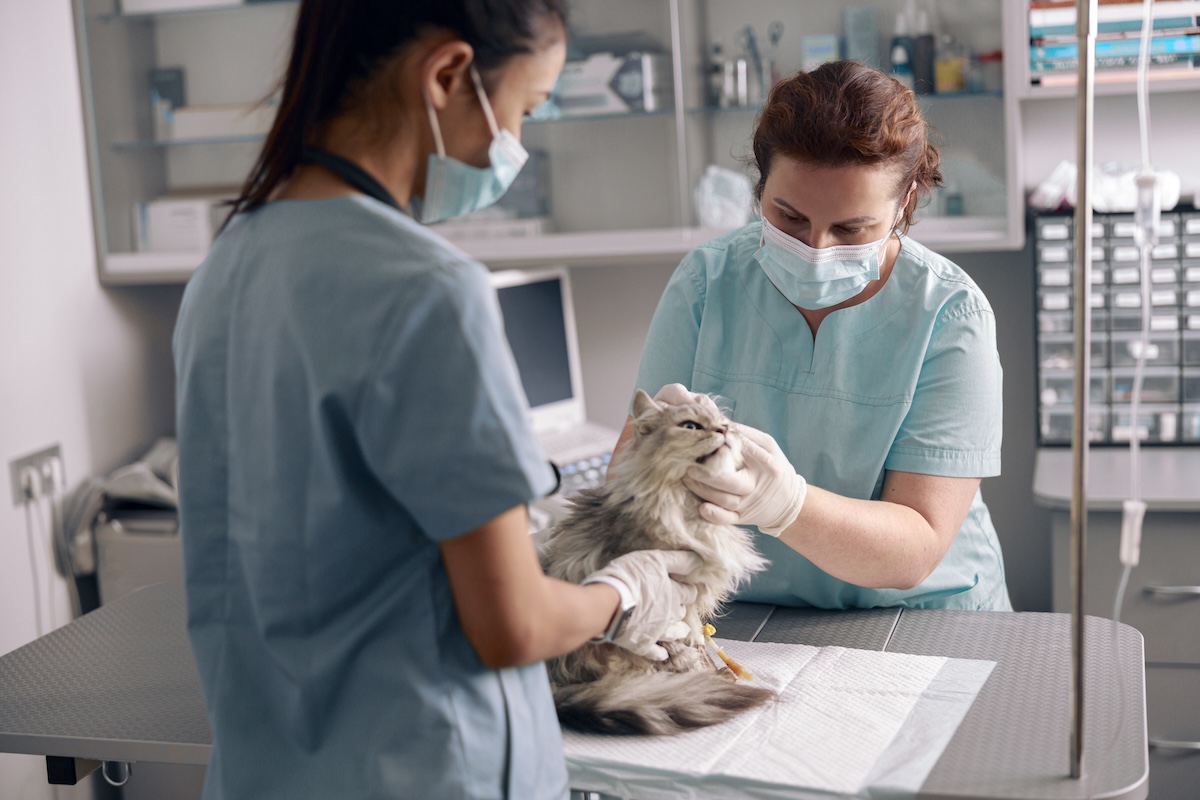
Get Your Customized Veterinarian Quote
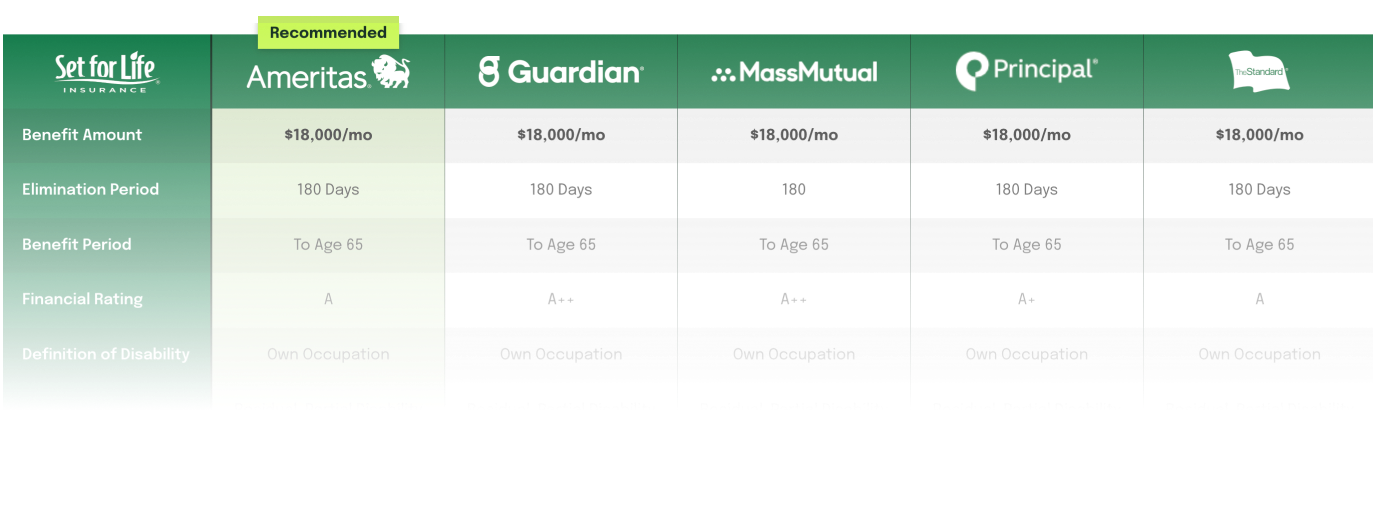
Compare Veterinarian Disability Insurance Side by Side
"*" indicates required fields










She made updating my files with each life event stress-free. I watched colleagues struggle to communicate with insurance companies, but not me. One email to Jamie and everything is taken care of. My family is protected and done so with ease, all thanks to Jamie. I highly recommend Set For Life!!!
Compare Veterinary Disability Insurance Options Across 5 Carriers
What Disability Insurance for Veterinarians Covers
Disability insurance for veterinarians replaces income when illness or injury prevents a doctor of veterinary medicine (DVM) from performing clinical work. What a claim actually pays comes down to 2 provisions, the definition of disability and the elimination period, the waiting period between disability onset and the first benefit payment. Most veterinarians elect a 90-day elimination period, which lowers the premium against a shorter wait and assumes personal savings cover the first 3 months.
Own-occupation coverage pays full benefits when a veterinarian cannot perform the material and substantial duties of veterinary medicine, even while working in a different capacity. Under Guardian (Berkshire Life Insurance Company of America, policy form ICC16 18ID Provider Choice) the Hands-on Patient Care Enhancement triggers total disability when a veterinarian who earns more than 50% of income from surgical or hands-on procedures loses that specific capacity, regardless of continuing work in teaching, consulting, or clinic management. A veterinarian who develops carpal tunnel syndrome from repetitive surgical work, or who loses grip strength after a large-animal kick, keeps qualifying for benefits under this provision even while running the practice from a desk.
Individual disability insurance for veterinarians is sold on a non-cancellable, guaranteed renewable basis by Ameritas (Ameritas Life Insurance Corp., policy form 4501NC), Guardian, MassMutual (Massachusetts Mutual Life Insurance Company, policy form ICC15-XLIS-RC Radius Choice), Principal (Principal Life Insurance Company, policy form ICC22-800-IDI Income Protector), and The Standard (Standard Insurance Company, policy form B180(7/17) Platinum Advantage). Non-cancellable means the carrier cannot raise the premium or cancel the policy while premiums are paid, and the coverage stays portable through a change in employer, practice, or association membership. Residual disability riders, available at every carrier in this set, pay a partial benefit when a veterinarian returns to reduced caseloads or fewer surgical hours and earns 15% to 20% less than before the disabling event.
Why Veterinary Medicine Carries Distinctive Disability Risk
Veterinary medicine carries a documented occupational injury rate few other professions match. A career built on physical capacity carries more exposure to a career-ending injury than a desk-based profession, which is why own-occupation and residual disability provisions, examined below, matter more for veterinarians than for most other insured professions. The U.S. Bureau of Labor Statistics recorded 11.1 nonfatal workplace injuries per 100 veterinary workers in 2024, more than 4 times the 2.3-per-100 average across private industry. Animal-related injury, including bites, scratches, and crush injuries from restraining or examining an animal, is common in veterinary practice, affecting veterinarians and veterinary technicians alike over a career.
3 risk categories drive most disability claims in this profession. Animal bite injuries, kicks, and other direct-contact trauma end a surgical or hands-on career suddenly; a bite that severs tendon function in a hand can end a small-animal surgeon’s ability to operate the same afternoon it happens. Musculoskeletal injury builds more slowly, from years of restraining large animals, standing through long surgeries, and repetitive procedural motion, and it is the more common path to a residual disability claim rather than a total one. Zoonotic exposure adds a third category unique to veterinary medicine, since a bite or scratch from an infected animal can transmit disease that sidelines a veterinarian for weeks even without a fracture, tear, or other direct trauma. A single cat bite ending a veterinarian’s surgical career illustrates how quickly a routine appointment becomes a career-defining claim.
Large-animal and equine veterinarians carry the highest exposure inside an already high-risk profession. A kick from a horse or a cow generates far more force than anything encountered in small-animal practice, and every carrier in this comparison places large-animal and equine veterinarians in a materially lower occupation class than small-animal veterinarians for exactly this reason, a distinction the next section documents by carrier.
AVMA LIFE Trust Versus Individual Disability Insurance for Veterinarians
AVMA LIFE Trust, formerly the Group Health and Life Insurance Trust (GHLIT), is the American Veterinary Medical Association’s group disability income plan, underwritten by New York Life, and it is the coverage most veterinarians encounter first, through membership enrollment rather than a formal quote. AVMA LIFE Trust is a distinct entity from AVMA PLIT, the association’s separate professional liability trust; the two names describe different products and neither substitutes for the other.
The group plan is genuinely useful as a first layer, particularly for a veterinarian carrying a health condition that would complicate individual underwriting, because AVMA LIFE Trust enrolls members without full medical underwriting during plan windows. It is not, on its base definition, an own-occupation policy, and its maximum monthly benefit shrinks by age, from $12,500 before age 50 down to $3,000 at ages 60 to 69. Individual disability insurance for veterinarians, sold on a non-cancellable basis by the 5 carriers named above, does not carry that automatic age-based reduction and delivers true own-occupation as base contract language, a definition choice, or a separately priced rider depending on the carrier. The table below sets both options side by side, row by row, using AVMA’s own published plan terms and the specimen contracts and product guides on file for each individual carrier.
AVMA LIFE Trust Group Disability Plan Versus Individual Disability Insurance for Veterinarians
| What the comparison shows | AVMA LIFE Trust Group Long-Term Disability (association plan, underwritten by New York Life) |
Individual Non-Cancellable Disability Policy (Ameritas, Guardian, MassMutual, Principal, The Standard) |
|---|---|---|
| Maximum monthly benefit | Age-banded: up to $12,500 before age 50, dropping to $9,000 at 50 to 54, $6,000 at 55 to 59, and $3,000 at 60 to 69 | Underwritten to the carrier’s participation limit based on documented income, with no automatic age-based reduction to the elected benefit |
| Definition of disability | The base definition is not own-occupation. An enhanced “Own-Occupation Plus” definition is available at additional cost and carries an income-reduction condition | True own-occupation, delivered in base contract language at Principal, as a definition choice at Guardian, and by a separately priced rider at The Standard and MassMutual |
| Benefit as a share of income | Capped at 60 percent of average earnings | Typically 60 to 70 percent of gross earned income at underwriting, set by the carrier’s income-replacement guidelines rather than one plan-wide cap |
| Mental and nervous disorder treatment | 24-month limitation on mental disorder and substance-use claims, with no extension option | Varies by carrier and occupation class; a large-animal veterinarian’s limitation terms can differ from a small-animal veterinarian’s at the same carrier (see the mental and nervous disorder table below) |
| Rate guarantee | Age-banded premium increases permitted, plus group-wide rate adjustments. Not non-cancellable | Non-cancellable and guaranteed renewable to a specified age shown on the policy schedule. Premiums cannot be raised or coverage cancelled by the carrier while premiums are paid |
| Portability | Terminates with AVMA membership or a change in occupation | Fully portable. Coverage stays with the veterinarian regardless of a change in employer, practice, or association membership |
| Future benefit increases | A Future Purchase Option requires additional premium now to reserve the right to increase coverage later | Future Increase Option riders, available at several carriers, let a veterinarian add coverage later without new medical underwriting, on terms set by each carrier |
| Student loan protection | Sold separately as its own supplemental product, not part of the base disability plan | Available as a rider at several carriers, with monthly caps generally in the $2,000 to $2,500 range |
| Enrollment underwriting | Guaranteed-issue-style accessibility for AVMA members enrolling within plan windows | Full medical and financial underwriting at application, based on occupation class and documented income |
Source: AVMA LIFE Trust plan facts are drawn from avmainsuranceservices.com and avmalifeplans.com and, where the 2026 restructure has left AVMA’s own site without current plan detail, from Student Loan Planner’s dedicated AVMA disability insurance review, corroborated against Chip Millard’s independent-agent review and The Entrepreneurial Vet’s veterinarian-authored review of the same plan. Individual policy terms are drawn from specimen contracts and product guides held for Ameritas Life Insurance Corp. (form 4501NC), Berkshire Life Insurance Company of America underwriting for Guardian (form ICC16 18ID), Massachusetts Mutual Life Insurance Company (form ICC15-XLIS-RC), Principal Life Insurance Company (form ICC22-800-IDI), and Standard Insurance Company (form B180(7/17)). AVMA LIFE Trust plan terms are set by AVMA LIFE Trust and New York Life and are subject to change; confirm current terms directly with the plan administrator. Individual policy terms shown are subject to underwriter review at the time of application.
Occupation Class and Practice Type for Veterinarians
What occupation class is a veterinarian for disability insurance? The answer depends on practice type, and every carrier draws the line at species treated rather than at the general label “veterinarian.” Small-animal practice consistently earns the higher, more favorable class; large-animal and equine practice drops 2 classes at every carrier in this comparison, which lowers the maximum monthly benefit available and can affect which riders a veterinarian qualifies to elect. Mixed, exotic and zoo, and specialty practice are not separately broken out in the product guides on file for any of the 5 carriers; a veterinarian practicing outside the small-animal or large-animal split confirms classification directly with the carrier at application.
The premium consequence of this split is real, even though carriers do not publish rate tables. 2 identical policies priced for the same monthly benefit and the same to-age-65 benefit period cost meaningfully more for a large-animal or equine veterinarian than for a small-animal veterinarian, because class drives the underwriter’s rate calculation directly. A large-animal veterinarian shopping coverage benefits from comparing all 5 carriers rather than applying to one, since the class code and its rate impact differ carrier to carrier even for the identical practice type, as the table below shows. Multi-life and association discounts, where a veterinary practice enrolls 3 or more doctors together, offset part of the class-driven premium difference regardless of which class each doctor falls into.
Occupation Class by Carrier for Veterinarians by Practice Type
 |
Ameritas Life Insurance Corp. Product Guide |
Guardian Berkshire Life Insurance Co. of America IDI Field Underwriting Guide |
Mass Mutual Massachusetts Mutual Life Insurance Co. Underwriting Guide |
Principal Principal Life Insurance Company Disability Product Guide |
The Standard Standard Insurance Company Product Guide |
|---|---|---|---|---|---|
| Class spread, small-animal to large-animal/equine | 6M to 4M | 5M to 3M | 5A to 3A | 5M/5A-M to 3M/3A-M | 5A/5P to 3A/3P |
| Small-animal veterinarian | 6M | 5M | 5A | 5M / 5A-M | 5A / 5P |
| Large-animal and equine veterinarian | 4M | 3M | 3A | 3M / 3A-M | 3A / 3P |
| Practice-type classing basis | Species treated, named directly in the occupation class schedule as “Veterinarians, DVM” | Species treated, named directly in the occupation class schedule as “Veterinarian” | Species treated, named directly under a dedicated “Veterinarian” heading in the class schedule | Practice setting (“small animal, in clinic” versus other), named directly under “Veterinarian” in the occupation class schedule | Species treated, named directly under a dedicated “Veterinarian” heading in the class schedule |
| Mixed, exotic/zoo, and specialty practice | Not separately broken out by any of the five guides on file for veterinarians. Confirm classification directly with the carrier at application. | ||||
Source: field underwriting and product guides published by each carrier, current as of the guides held: Ameritas Life Insurance Corp. product guide, Berkshire Life Insurance Company of America (Guardian) IDI Field Underwriting Guide, Massachusetts Mutual Life Insurance Company underwriting guide, Principal Life Insurance Company Disability Product Guide, and Standard Insurance Company product guide. Class assignments are subject to underwriter review at the time of application and may vary by state and by the specific nature of a veterinarian’s practice.
How Veterinary Coverage Compares Across Carriers
Residual disability formulas, recovery-benefit provisions, and maximum benefit periods differ by carrier and, at some carriers, by veterinary specialty. A residual claim pays a partial benefit calculated as the percentage of income a veterinarian has lost against pre-disability earnings, and the formula, the recovery-benefit trigger after returning to reduced hours, and how long residual payments can continue all vary enough between Ameritas, Guardian, MassMutual, Principal, and The Standard to change what an identical injury actually pays out. A veterinarian reducing caseload after a hand injury needs the recovery benefit to keep paying as long as income stays below the pre-injury level, not just during a fixed post-return window.
The 3 tables below set the comparison side by side, covering which riders and specialty provisions each carrier documents, how each carrier structures the recovery benefit once a veterinarian returns to reduced work, and how long residual payments can run under each carrier’s benefit-period structure.
Insurance Companies Rated for Veterinary Disability Coverage
Several carriers write disability insurance for veterinary professionals. These carriers maintain A+ or higher A.M. Best financial strength ratings and offer flexible definitions for own-occupation coverage.
Set for Life Insurance compares disability insurance for veterinarians side by side to identify optimal benefits, elimination periods, and cost structures tailored to each DVM’s individual needs, whether the practice employs one veterinarian or several DVMs on staff.
Own-occupation disability insurance pays full benefits if a veterinarian cannot perform specialized clinical duties, even when able to work in a non-clinical capacity. A DVM (Doctor of Veterinary Medicine) who develops carpal tunnel syndrome or a herniated disc may still teach or manage a clinic but would qualify for total benefits under true own-occupation definitions.
This own-occupation disability insurance for veterinarians recognizes the unique skill set of veterinary practitioners. Set for Life Insurance structures veterinarian disability insurance coverage so veterinarians receive benefits specific to their professional role, rather than being reclassified under any occupation terms common in group policies.
|
Ameritas Life Insurance Corp. 4501NC · Enhanced Residual Rider (AERES) |
Guardian Berkshire Life Insurance Co. of America ICC16 18ID · Provider Choice + Enhanced Partial Rider |
Lloyd’s Petersen International Underwriters PDI111521 · Optional Residual Rider |
Mass Mutual Massachusetts Mutual Life Insurance Co. ICC15-XLIS-RC · Extended Partial Disability (EPR) |
Principal Principal Life Insurance Company ICC22-800-IDI · Income Protector |
The Standard Standard Insurance Company B180(7/17) · Platinum Advantage + Residual Riders |
|---|---|---|---|---|---|---|
| Specialty Practice Nuances and Notable Provisions | ||||||
| Veterinary practice applicability Provisions noted where relevance to veterinary clinical and surgical work is confirmed or where veterinary specialty recognition is not confirmed in the specimen |
Specialty own-occupation for physicians/dentists (specimen confirmed); veterinary specialty recognition not confirmed in this specimen, verify with carrier 15% income loss threshold is the lowest tested, occupation-neutral and applicable to veterinarians CPI-U indexing of prior earnings during claim protects against inflation eroding residual benefit, occupation-neutral Accounting method choice (cash or accrual) accommodates both employed and practice-owner veterinarians |
Surgical Procedure Enhancement and Hands-on Patient Care Enhancement (confirmed in specimen): If more than 50% of income comes from surgical procedures or hands-on care, total disability is triggered solely by loss of that capacity Capacity-based trigger is directly relevant to veterinarians performing surgery and hands-on animal care; specimen names physicians as its example, so eligibility for a given DVM is confirmed at the individual-policy level To Age 70 benefit period available Income includes business profits from privately held entities Prior Income = best 24 months OR best 2-of-3 years |
Lloyd’s specialty own-occupation language confirmed in specimen; veterinary specialty recognition not confirmed in this specimen, verify with carrier Subjective Pain exclusion applies to any claimant, including veterinarians Residual rider is optional add-on; base policy is total-disability-only Useful as excess/supplemental layer above group DI limits Expiry-date policy, not lifetime renewable in same way as Big 5 carriers |
Participating policy, eligible for dividends (not guaranteed) RetireGuard rider protects retirement contributions during disability, unique to MassMutual, occupation-neutral and applicable to veterinarians Own Occupation Rider available separately from the EPR, both can be elected simultaneously Short-Term Disability Benefits Rider (STR) included within the EPR structure |
Specialty own-occupation confirmed: “single professionally recognized specialty in medicine or dentistry” is deemed own occupation; veterinary specialty recognition not confirmed in this specimen, verify with carrier True Own Occupation add-on available at additional cost Annual Increase Rider (AIR): automatic 3% benefit increase, no additional cost, to earlier of 20 years or age 50 Pandemic suspension provision, unique feature allowing suspension during declared pandemic |
Specialty own-occupation confirmed: “single specialty recognized by ABMS, AOABOS, or ADA” is deemed own occupation; veterinary specialty recognition not confirmed in this specimen, verify with carrier Three-tier residual structure: Basic / Enhanced / Short-Term Family Care Benefit: pays if working reduced hours to care for a seriously ill family member, no total disability required Survivor Benefit: 3x basic monthly benefit paid to beneficiary if death occurs while benefits are payable Platinum Advantage specimen is for limited states (CT, DE, DC, FL, MT, ND, SD) |
Source: specimen policies on file for each carrier, current as of the specimens held: Ameritas Life Insurance Corp. policy form 4501NC with the Enhanced Residual Rider (AERES), Berkshire Life Insurance Company of America (Guardian) policy form ICC16 18ID with the Provider Choice and Enhanced Partial riders, Petersen International Underwriters (Lloyd’s) policy form PDI111521 with the optional residual rider, Massachusetts Mutual Life Insurance Company policy form ICC15-XLIS-RC with the Extended Partial Disability rider, Principal Life Insurance Company policy form ICC22-800-IDI (Income Protector), and Standard Insurance Company policy form B180(7/17), Platinum Advantage, with residual riders. Several specimens confirm a specialty own-occupation provision for physicians or dentists without separately confirming veterinary specialty recognition; a veterinarian should verify that provision directly with the carrier. Terms shown are subject to underwriter review at the time of application and may vary by state.
Residual Disability and Recovery Benefit Provisions
Residual disability insurance provides partial income replacement when a veterinarian can work part-time or earns less due to limited capacity following an illness or injury. A 15 to 20 percent income loss typically triggers benefits, helping maintain financial stability during gradual recovery.
Set for Life Insurance structures residual disability riders, ensuring consistent income support throughout rehabilitation.
This type of veterinary disability coverage stabilizes personal income and supports ongoing practice operations, a critical function for maintaining veterinary practice continuity.
|
Ameritas Life Insurance Corp. 4501NC · Enhanced Residual Rider (AERES) |
Guardian Berkshire Life Insurance Co. of America ICC16 18ID · Provider Choice + Enhanced Partial Rider |
Lloyd’s Petersen International Underwriters PDI111521 · Optional Residual Rider |
Mass Mutual Massachusetts Mutual Life Insurance Co. ICC15-XLIS-RC · Extended Partial Disability (EPR) |
Principal Principal Life Insurance Company ICC22-800-IDI · Income Protector |
The Standard Standard Insurance Company B180(7/17) · Platinum Advantage + Residual Riders |
|---|---|---|---|---|---|---|
| Recovery Benefit Provisions | ||||||
| Recovery benefit Protections after returning to work, continued payments if income remains depressed |
Explicit Recovery Benefit provision (Specimen) Triggers after a disability benefit period ends if the insured has returned to work, is performing material duties 80% or more of prior time, and still has 15% or more loss of monthly earnings demonstrably caused by the prior disability. Duration: Continues up to the residual maximum benefit period. |
Recovery Benefit, income-loss based, ongoing (Specimen) Benefits continue post-recovery as long as Loss of Income persists due to the disability. Because Guardian uses an income-loss formula, benefits naturally continue as long as Current Income remains below Prior Income due to the disabling condition. Prior Income protection: Uses the best 24-month or best-2-of-3-years average. |
Recovery benefit per rider, verify current rider (Specimen) Lloyd’s base specimen does not contain recovery benefit language. Standard Lloyd’s/PIU residual riders may include recovery provisions, but this must be confirmed against the current executed rider. |
Recovery Benefit included in EPR rider (Standard) After returning to full-time work following a disability for which EPR benefits were paid, if Monthly Earnings remain below Predisability Earnings due to the disability, a proportional recovery benefit continues. Duration: up to the remaining Maximum Benefit Period. |
Recovery Benefit, proportional, ongoing post-return (Standard) Provides recovery benefits when an insured has returned to Full Time Work but Earnings remain below prior levels due to the disability. Benefit calculated using the same proportional formula. |
Recovery Benefit included, Enhanced Residual Rider only (Specimen) The Basic Residual Rider does not include the Recovery Benefit, the Enhanced version is required. The base policy confirms premiums are waived while Recovery Benefits are payable. Short-Term Residual Rider: does not include recovery benefit. |
Source: specimen policies and riders on file for each carrier, current as of the specimens held: Ameritas Life Insurance Corp. policy form 4501NC (Enhanced Residual Rider, AERES), Berkshire Life Insurance Company of America (Guardian) policy form ICC16 18ID (Enhanced Partial Rider), Petersen International Underwriters (Lloyd’s) policy form PDI111521 (optional residual rider), Massachusetts Mutual Life Insurance Company policy form ICC15-XLIS-RC (Extended Partial Disability rider), Principal Life Insurance Company policy form ICC22-800-IDI (Income Protector), and Standard Insurance Company policy form B180(7/17), Platinum Advantage (Enhanced Residual Rider). The Lloyd’s base specimen on file does not itself document recovery-benefit language; confirm current rider terms directly with the carrier. Terms shown are subject to underwriter review at the time of application and may vary by state.
Benefit Periods for Long-Term Veterinary Disability Coverage
Long-term disability insurance for veterinarians typically provides benefits until age 65 or 67, extending income protection through the end of a veterinary career. Some veterinarians choose benefit periods extending to age 70 to align with practice ownership or academic tenure obligations.
Set for Life Insurance advises selecting a benefit duration consistent with the DVM’s financial plan, student loan payoff timeline, or anticipated retirement age. With long-term disability insurance for veterinarians, shorter benefit periods of two or five years can lower premiums but may expose professionals to long-term income risk.
|
Ameritas Life Insurance Corp. 4501NC · Enhanced Residual Rider (AERES) |
Guardian Berkshire Life Insurance Co. of America ICC16 18ID · Provider Choice + Enhanced Partial Rider |
Lloyd’s Petersen International Underwriters PDI111521 · Optional Residual Rider |
Mass Mutual Massachusetts Mutual Life Insurance Co. ICC15-XLIS-RC · Extended Partial Disability (EPR) |
Principal Principal Life Insurance Company ICC22-800-IDI · Income Protector |
The Standard Standard Insurance Company B180(7/17) · Platinum Advantage + Residual Riders |
|---|---|---|---|---|---|---|
| Benefit Period for Residual Disability | ||||||
| Residual benefit period Maximum duration for which residual benefits can be paid |
Remaining unused portion of the Total Disability Maximum Benefit Period (Specimen) The Residual Maximum Benefit Period equals the total unused portion of the maximum benefit period for total disability shown on the schedule. Combined total and residual payments cannot exceed this period. Typically to Age 65/67 when selected. |
Same Benefit Period as Total Disability, to Age 65, 67, or 70 (Specimen) Benefit Periods of To Age 70/67/65 or 10/5/2 Years are available. The Enhanced Partial rider benefit period matches the policy benefit period. To Age 70 option available for physicians, distinctive among carriers. |
Per Schedule of Benefits / rider terms (Specimen) The residual rider benefit period is set at time of issue and shown on the Schedule of Benefits (Section 1-D). Confirm with current rider. |
To Age 65 (base); Extended to Age 65 via Maximum Benefit Period Endorsement (Specimen) Specimen shows coverage end date for Extended Partial Disability corresponding to the policy’s non-cancellable period to age 65. A separate Maximum Benefit Period Endorsement is available with its own premium schedule. |
Same as base policy Maximum Benefit Period, 2 years, 5 years, To Age 65/67/70 (Specimen) Options include To Age 65, 67, and 70. Residual benefits run within this same period. To Age 70 available depending on occupation class. |
Same as base policy Maximum Benefit Period, to Age 67 in this specimen (Specimen) Maximum Benefit Period schedule applies (e.g., if disability begins at 62: 60 months; at 63: 48 months). Enhanced Residual Disability Benefit Rider matches base benefit period. |
Source: specimen policies on file for each carrier, current as of the specimens held: Ameritas Life Insurance Corp. policy form 4501NC, Berkshire Life Insurance Company of America (Guardian) policy form ICC16 18ID, Petersen International Underwriters (Lloyd’s) policy form PDI111521, Massachusetts Mutual Life Insurance Company policy form ICC15-XLIS-RC, Principal Life Insurance Company policy form ICC22-800-IDI, and Standard Insurance Company policy form B180(7/17). Benefit periods and residual maximum benefit periods vary by occupation class and by state, and the Lloyd’s residual rider period is set at issue per that policy’s own schedule of benefits. Confirm current terms directly with the carrier at application.
How Disability Coverage for Veterinarians Handles Mental and Nervous Claims
Disability coverage for veterinarians treats mental and nervous disorder claims differently by carrier, and, at 2 carriers, differently by practice type within the same policy. Ameritas imposes a mandatory limitation on its non-cancellable policy whose duration itself tracks occupation class, running 5 years for a small-animal veterinarian and 2 years for a large-animal veterinarian. The Standard goes further and applies a mandatory 24-month limitation only to its large-animal and equine class, while a small-animal veterinarian at the same carrier can elect the limitation instead of carrying it automatically. Guardian and Principal make the limitation elective for veterinarians at every practice type and discount the premium when a veterinarian elects one. MassMutual’s underwriting guide does not address the provision, which a veterinarian confirms directly with the carrier rather than assuming a default.
AVMA LIFE Trust caps mental and nervous claims at 24 months with no extension option, a fixed limitation that does not vary by carrier, class, or election, unlike the individual-policy landscape the table below documents carrier by carrier.
Mental and Nervous Disorder Benefit Treatment for Veterinarians by Carrier
|
Ameritas Life Insurance Corp. Product Guide |
Guardian Berkshire Life Insurance Co. of America IDI Field Underwriting Guide |
Mass Mutual Massachusetts Mutual Life Insurance Co. Underwriting Guide |
Principal Principal Life Insurance Company Disability Product Guide |
The Standard Standard Insurance Company Product Guide |
|---|---|---|---|---|---|
| Mandatory or elective for a veterinarian | Mandatory on the non-cancellable policy; duration varies by occupation class | Elective (veterinarians are not on the carrier’s required-limitation list) | Not addressed in the guide on file | Elective, no-cost rider | Mandatory for the large-animal/equine class (3P); elective for the small-animal class (5A/5P) |
| Small-animal veterinarian | 5-year cumulative limitation on the non-cancellable policy | No limitation required; a limitation may be elected for a premium discount | Not addressed in the guide on file; confirm directly with the carrier | No limitation required; the Mental/Nervous & Substance Abuse rider may be elected at no added cost for a premium discount | No limitation required; a limitation may be elected for a premium discount |
| Large-animal and equine veterinarian | 2-year cumulative limitation on the non-cancellable policy | No limitation required; a limitation may be elected for a premium discount | Not addressed in the guide on file; confirm directly with the carrier | No limitation required; the Mental/Nervous & Substance Abuse rider may be elected at no added cost for a premium discount | 24-month limitation required by endorsement for occupation class 3P |
| Discount for electing a limitation | Not itemized separately by duration in the guide on file | 10% for a 24-month limitation, 12.5% for a 12-month limitation, 15% for a 6-month limitation | Not addressed in the guide on file | Up to 10% | 10% premium rate discount when the 24-month limitation is elected |
Source: field underwriting and product guides published by Ameritas Life Insurance Corp., Berkshire Life Insurance Company of America (Guardian), Principal Life Insurance Company, and Standard Insurance Company. Massachusetts Mutual Life Insurance Company’s underwriting guide on file does not document mental and nervous disorder limitation terms; confirm directly with the carrier. State variations apply to every carrier’s mental and nervous disorder provisions, and Guardian’s mandatory-limitation list is built around specific medical specialties rather than veterinarians. Terms shown are subject to underwriter review at the time of application.
Who Should Consider Disability Insurance for Veterinarians?
Small-Animal and Mixed-Practice Veterinarians
A small-animal or mixed-practice veterinarian carries the field’s most favorable occupation class at every carrier, which means a given monthly benefit costs less than the same benefit at a large-animal practice. An own-occupation policy still matters here, since a small-animal surgeon who loses hand strength from years of dental extractions and spays qualifies for full benefits under a true own-occupation definition even while continuing to see wellness appointments or manage the practice.
Large-Animal and Equine Practitioners
A large-animal or equine veterinarian faces the field’s highest physical risk and its least favorable occupation class at every carrier compared above. Comparing all 5 carriers matters more here than for any other segment, since the class code and its cost impact differ carrier to carrier for the identical large-animal or equine practice type, and multi-life discounts through a practice’s other doctors can offset part of the difference.
Disability Insurance for Veterinary Practice Owners
A veterinarian who owns her practice, whether structured as a sole proprietorship or a larger partnership, carries a second exposure beyond personal income, since the practice’s fixed costs, rent, staff wages, and equipment leases continue whether or not the owner can work. Business overhead expense insurance reimburses those fixed costs during a disability, and a separate business loan protection policy, sometimes described as practice loan protection, covers a practice-acquisition or expansion loan payment the owner would otherwise miss. Both products layer on top of, rather than replace, the owner’s personal disability policy, and a multi-doctor practice benefits from resolving how a buy-out is determined before a disability event forces the question.
Disability Insurance for New Veterinarians
A new veterinarian entering practice, or a DVM still completing a specialty residency, carries veterinary school debt that averages well into 6 figures and a career not yet underwritten at its highest earning years. Guaranteed Standard Issue disability coverage is available to veterinary residents at some training programs, program-dependent on the institution rather than universal; the Guaranteed Standard Issue disability insurance hub documents which institution programs currently participate. A student loan rider, available at several individual carriers, keeps loan payments current during a total disability.
Licensed Veterinarians Disability Insurance and Multi-Life Discounts
Veterinarians can take advantage of special discounts on individual disability insurance through Set for Life Insurance. When three or more veterinarians from the same practice apply, they may qualify for multi-life discounts, reducing premiums while securing top-tier, own-occupation coverage.
Set for Life also has preferred pricing arrangements through select veterinary associations, allowing members to save even more. These discounts can make a significant difference in protecting your income and supporting long-term financial security for licensed veterinarians and their practices.
Sources and Industry References
This page draws on carrier specimen contracts, field underwriting guides, published association plan materials, and federal health data.
- Ameritas Life Insurance Corp., Guardian underwritten by Berkshire Life Insurance Company of America, Massachusetts Mutual Life Insurance Company, Principal Life Insurance Company, and Standard Insurance Company each supply the specimen policy contracts and field underwriting guides this page cites by form number.
- Certain Underwriters at Lloyd’s, executed by Petersen International Underwriters, supply the specimen residual disability rider language compared in the carrier tables above.
- AVMA LIFE Trust, the American Veterinary Medical Association’s group disability plan underwritten by New York Life, publishes the plan terms compared against individual coverage above, corroborated by Student Loan Planner’s dedicated review, Chip Millard’s independent-agent review, and The Entrepreneurial Vet’s veterinarian-authored review.
- The U.S. Bureau of Labor Statistics reports the occupational injury rate cited for veterinary workers earlier on this page.
- The Income Protection Journal Podcast episode on a veterinarian’s career-ending cat bite injury supplies the claim scenario linked from the risk section above.