Disability Insurance for Athletes and Professional Sports Income Protection
Best Disability Insurance for Athletes
Income Protection for Professional Athletes
High-Limit Sports Disability Coverage
Disability insurance for athletes protects professional and collegiate competitors from loss of income caused by injury or illness. Athlete disability insurance helps safeguard guaranteed contracts, signing bonuses, endorsement income, and future earnings when an athlete can no longer compete at a professional level.

Get Your Customized Pro Athlete Quote
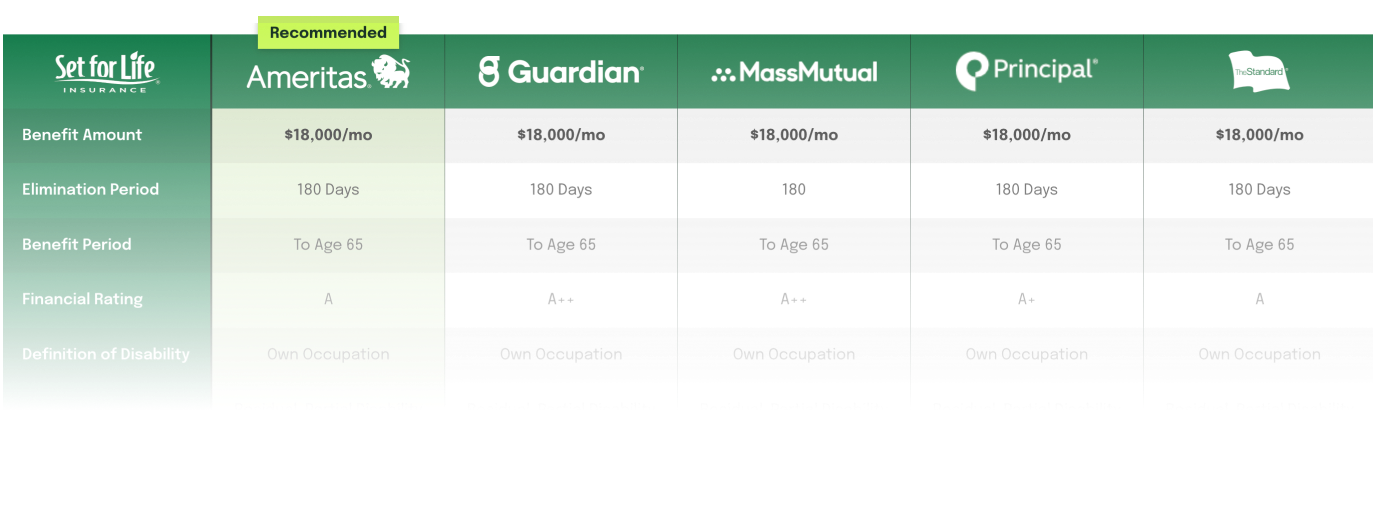
Compare Pro Athlete Disability Quotes Side‑by‑Side
"*" indicates required fields









She made updating my files with each life event stress-free. I watched colleagues struggle to communicate with insurance companies, but not me. One email to Jamie and everything is taken care of. My family is protected and done so with ease, all thanks to Jamie. I highly recommend Set For Life!!!
Athlete Disability Insurance Quotes
What Triggers Each Athlete Disability Policy to Pay
 |
College PTD Lloyd’s via Petersen International Underwriters PTDCollegePIU010126Amended7 |
Professional PTD Lloyd’s via Petersen International Underwriters PTDPIU010126Amended7 |
College LOV Lloyd’s via Petersen International Underwriters LOVCollege010126 |
Professional LOV Lloyd’s via Petersen International Underwriters LOVAppendix010126 |
Critical Injury Lloyd’s via Petersen International Underwriters CI010126 |
|---|---|---|---|---|---|
| Payout structure once trigger is met | Lump sum (Sum Insured) | Lump sum (Sum Insured) | Calculated Loss (formula) | Calculated Loss (formula) | Lump sum (Category 1 or Category 2 max) |
| 1 · Trigger Event | |||||
| What event the policy pays on The specific qualifying event named in the Insuring Agreement |
Accident or Sickness that results in Total Disability culminating in Permanent Total Disability. PTD defined as continuous Total Disability for the Elimination Period with no likely hope of improvement sufficient to participate ever again in the stated occupation. | Same as College PTD. Accident or Sickness causing Total Disability culminating in Permanent Total Disability under the same PTD definition. | An Accident or Sickness named in Appendix 1 (Covered Accident/Sickness List) occurring during the Term of Insurance, followed by a Loss of Value, defined as not receiving an Offer of sufficient Compensation from a Professional Sports Team. | Same trigger structure as College LOV. Appendix 1 accident or sickness during the Term of Insurance, followed by a Loss of Value compared against the Loss Threshold. | An Accident or first-diagnosed Sickness during the Term of Insurance that causes a loss scheduled in Category 1 or Category 2 of the Schedule of Benefits. |
| 12-month culmination window How quickly the qualifying outcome must arise after the triggering event |
Total Disability must culminate in Permanent Total Disability within 12 months of the Accident date or the date the Sickness first Manifests. | Same 12-month culmination window as College PTD. Measured from Accident date or first Manifestation of Sickness. | No 12-month culmination window. The Loss of Value is measured against contract offers actually received, not against a time-bounded medical outcome. | No 12-month culmination window. Same offer-comparison structure as College LOV. | No 12-month culmination window. The Critical Injury is the loss itself. Surgical timing requirements for named musculoskeletal injuries are listed in the policy by injury type (30 to 180 days depending on the injury). |
| 2 · Time Constraints Inside the Policy | |||||
| Elimination Period The continuous period of Total Disability that must pass before any claim will be considered |
Stated in the Schedule of Benefits, set at issue. Must run continuously during the Total Disability period before Permanent Total Disability is recognized. | Same as College PTD. Schedule-set, continuous Total Disability requirement. | Not applicable. The LOV trigger is the failure to receive a qualifying Offer, not a continuous-disability period. | Not applicable. Same as College LOV. | Not applicable. Critical Injury pays on the named injury itself once the severity threshold (High-Grade Tear or other defined diagnosis) is confirmed. |
| Rehabilitation Period (claim-voiding return to play) How returning to play during recovery can extinguish a pending claim |
If You participate in Your occupation for an aggregate of the Rehabilitation Period stated in the Schedule of Benefits, You are deemed conclusively fully rehabilitated and no claim will be payable. Schedule-measured in GAMES/EVENTS. | Identical provision to College PTD. Aggregate participation for the Rehabilitation Period bars further claim. | Not applicable. LOV is not a continuous-disability claim and has no Rehabilitation Period. | Not applicable. Same as College LOV. | Not applicable. Critical Injury pays at the time of qualifying named-injury diagnosis and surgery completion. |
| 3 · Payout Structure and Certificate Termination | |||||
| How the benefit is paid Single payment or formula-based |
Sum Insured paid as a lump sum to the Loss Payee following the Elimination Period. | Same lump-sum Sum Insured payment as College PTD. | Calculated Loss paid to the Loss Payee. Calculated Loss equals Season Loss multiplied by Season Multiplier, capped at the Maximum Benefit Amount. Season Loss equals Loss Threshold less the average Compensation from the Largest Offer. | Same Calculated Loss formula as College LOV. | The Maximum Benefit stated for the applicable Category. Total payout cannot exceed the Category 1 Maximum or the sum of both Category maximums, whichever is the lesser. |
| Certificate termination after payout Whether the certificate stays in force after benefits are paid |
Certificate terminates on the date the Sum Insured is paid. | Certificate terminates on the date the Sum Insured is paid. | Certificate continues subject to its other provisions. Future Permanent Total Disability claim arising from the same Accident or Sickness is reduced by the Loss of Value settlement amount. | Same as College LOV. PTD recovery from the same Accident or Sickness is offset by the LOV settlement. | Certificate continues subject to the per-Category maximums and the total-benefit cap. |
| Refund of benefits on recovery Obligation to return paid benefits if You recover |
Yes. If You subsequently recover sufficiently to resume the occupation stated in the Declarations, You agree to immediately refund all benefits paid. | Yes. Same refund obligation as College PTD. | No refund-on-recovery provision in the LOV form. | No refund-on-recovery provision in the LOV form. | Yes. Same refund-on-recovery obligation as the PTD products. |
Source: Specimen policies underwritten by certain Underwriters at Lloyd’s, executed by Petersen International Underwriters, Valencia, CA. Form identifiers PTDCollegePIU010126Amended7, PTDPIU010126Amended7, LOVCollege010126, LOVAppendix010126, and CI010126. Terms shown are from specimen policy language and are subject to underwriter review at the time of application.
Athlete Disability Insurance by Career Stage
| Career Stage | Coverage Need | Disability Insurance Product | Benefit Trigger | Eligibility Requirement | Key Exclusions |
|---|---|---|---|---|---|
| College athlete, draft-eligible season | Career-ending injury before you sign a professional contract | College PTD (Permanent Total Disability) | Injury or illness that permanently ends your ability to compete professionally | Must be purchased before an injury occurs; active enrollment as a student-athlete | Mental health conditions; neurocognitive conditions; concussion if you have a history of three or more prior concussions or loss of consciousness |
| College athlete projected to go in the first round | Drop in draft position caused by injury or illness | College LOV (Loss of Value) | Injury or illness that causes you to be drafted materially lower than your projected slot, reducing your contract value | Must be in force before your draft-eligible season begins; only available for players projected in the first round; you must declare for the draft | Second-round projections; career decline not caused by a specific injury; choosing to return to school after the policy is issued |
| Any athlete at any career stage | One of a defined list of serious injuries | Critical Injury (CI) | A named injury from the policy list, confirmed at or above the severity threshold (50% or greater partial-thickness tear, or full-thickness tear, for musculoskeletal injuries) | Day 3 picks and undrafted players must make the 53-man roster before coverage is available | Injuries not on the named list; partial tears below the 50% threshold; injuries sustained while intoxicated |
| Rookie, any draft round, after signing your contract | Career-ending injury after you sign but before your career fully vests | Professional PTD | Injury or illness that permanently ends your ability to compete professionally | Must notify insurer of any change in contract status; available at signing of rookie deal | Your projected second contract; career option value; mental health conditions; neurocognitive conditions |
| Rookie, Year 4, approaching free agency | Gap between the contract you were projected to sign and the contract you actually sign after an injury | Professional LOV | Injury or illness in your final rookie-deal season that causes you to sign a materially lower contract than projected | Must notify insurer of any change in contract status; a signed release is required before benefit is paid | Career decline not linked to a specific covered injury; contracts projected beyond the policy’s defined benefit period |
Source: Specimen policies underwritten by certain Underwriters at Lloyd’s, executed by Petersen International Underwriters, Valencia, CA. Product availability, pricing, and underwriting terms vary by athlete, position, and contract stage. All figures subject to underwriter review at application.
Who Should Consider Disability Insurance for Athletes?
Athlete disability insurance is designed for individuals whose income depends on their ability to compete at a high level. Coverage may be appropriate for athletes at several stages of their careers.
Professional Athletes
Professional athletes competing in leagues such as the NFL, NBA, MLB, NHL, MLS, or PGA Tour often use disability insurance to protect guaranteed contracts, signing bonuses, and endorsement income. These policies can provide high-limit disability coverage that reflects the unique earning potential of professional sports careers.
Collegiate and NCAA Athletes
Elite NCAA athletes projected to enter professional drafts may use disability insurance to protect future earnings potential. Coverage can include loss of value insurance and draft protection insurance, which help safeguard projected contract value if a pre-draft injury affects draft position.
Olympic and International Competitors
Athletes competing internationally or training for Olympic competition may obtain sports disability insurance to protect sponsorship income, national team compensation, and training stipends if an injury interrupts their competitive career.
Athletes With Endorsement and Sponsorship Income
Athletes whose income includes endorsements, licensing agreements, sponsorship contracts, or appearance fees may structure disability insurance policies to protect these revenue streams alongside base salary.
Athlete Disability Insurance FAQs
Professional athletes earn most of their career income inside a short window that closes the moment an injury or illness ends competition. A career-ending Achilles rupture in year 2 of a 6-year contract removes every guaranteed dollar after that point. Individual disability insurance pays a benefit when a covered event ends the athlete’s ability to compete. The Permanent Total Disability definition in policy form PTDPIU010126Amended7 requires no likely hope of improvement, based on current prevailing medical standards, sufficient to participate ever again in the athlete’s stated occupation.
Sources and Industry References
Information about athlete disability insurance and draft protection coverage is informed by publicly available data from sports leagues, insurance carriers, and sports finance reporting, including:
- National Collegiate Athletic Association (NCAA): athlete eligibility and NIL policy guidance
- National Football League (NFL): rookie contract structures and draft compensation guidelines
- National Basketball Association (NBA): draft rules and rookie scale contracts
- Lloyd’s of London: underwriting for high-limit athlete disability insurance
- Sports business reporting from outlets such as ESPN and Sports Business Journal
Disclaimer
The information on this page is for general informational purposes only and does not constitute legal, financial, or tax advice. Coverage availability, underwriting terms, and eligibility requirements vary by athlete, position, career stage, health history, and state of residence. Policy terms described on this page are drawn from specimen policy language and are subject to change. Actual policy terms govern in all cases.
Specialty products including permanent total disability, loss of value, and critical injury coverage are underwritten by certain underwriters at Lloyd’s of London and accessed through Petersen International Underwriters, a licensed managing general agent. Contract values and income figures referenced on this page are illustrative only. Set for Life Insurance is a licensed insurance producer.