
Every fall, financial services employers open their enrollment period, the one stretch of the year when employees can change their disability insurance elections without a qualifying life event.
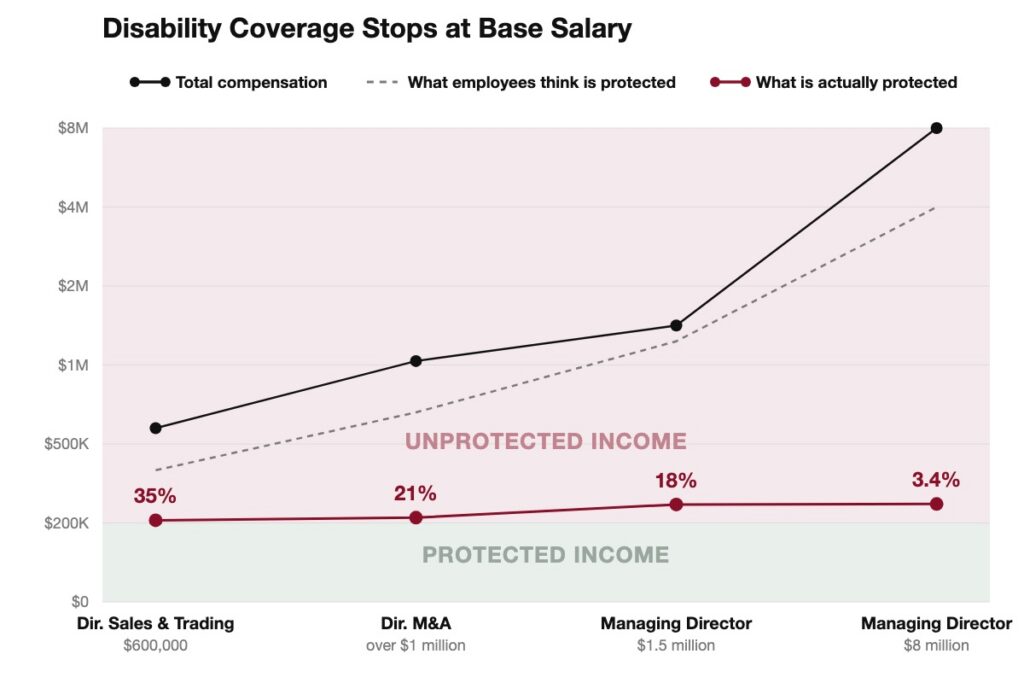
A new report from the Income Protection Journal, Disability Coverage Stops at Base Salary, examined group long-term disability plans at 2,912 financial services employers and found that the vast majority calculate the benefit on base salary alone, not total compensation.
For professionals whose pay is weighted toward bonus, that distinction can leave most of their income unprotected if a disabling illness or injury keeps them out of work.
Why the Definition of Covered Earnings Matters
Insurers call it covered earnings, the term a group disability plan uses to define how much of an employee’s pay its benefit actually protects. There is no industry standard for what that term means.
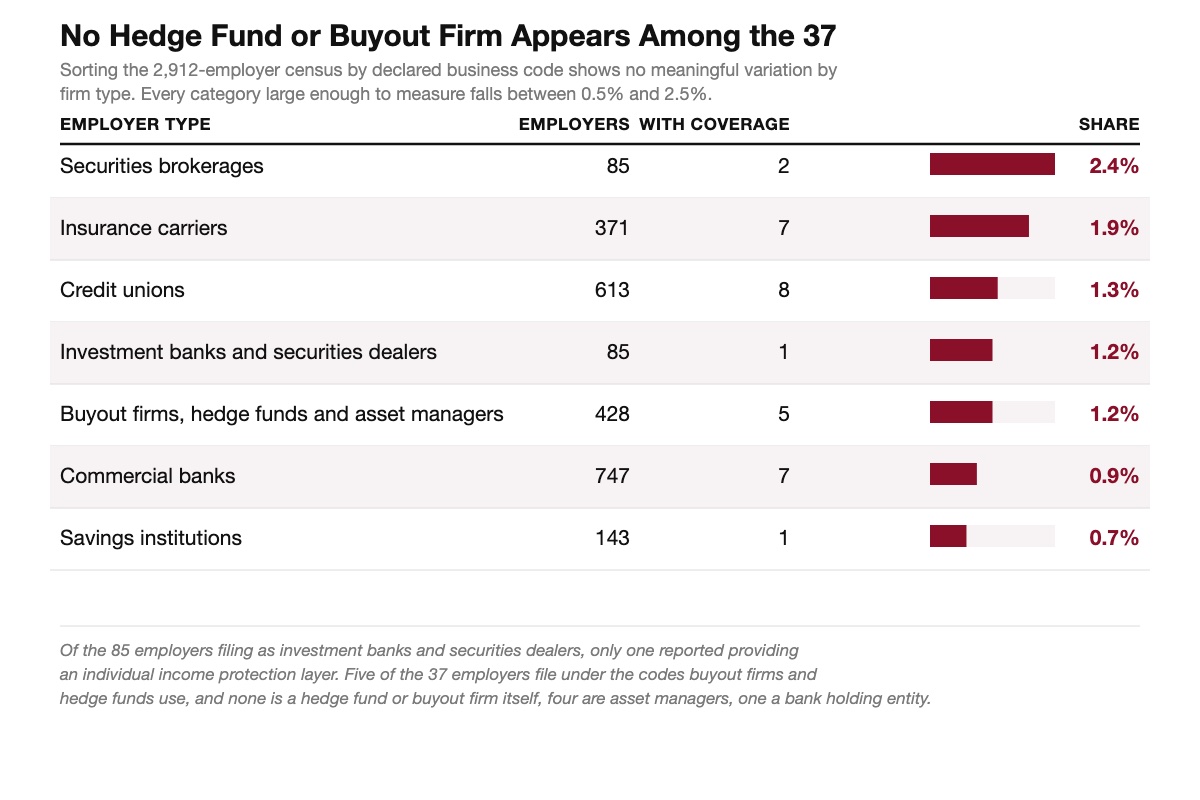
For most financial services employers, covered earnings turns out to be base salary alone. Of the 2,912 employers reviewed, only 37, 1.3 percent, provide any individual disability coverage above the group plan.
The research behind this finding, a new report from the Income Protection Journal, sets out exactly how a group disability benefit is calculated and what that calculation leaves out.
That distinction is not an abstraction. On Wall Street, where bonus compensation, equity compensation and carried interest routinely make up a larger share of pay than base salary, a benefit calculated on base salary alone can replace a fraction of what a disabled professional was actually earning.
Why This Matters Most in the Middle of a Career
The professionals most exposed to this distinction are rarely the most senior. A managing director several years into a high-earning run has typically had time to build savings that can absorb a period without income.
The exposure concentrates one level down, among directors and younger managing directors who are high earners but have not yet had time to accumulate a financial cushion. These are also the years when fixed costs, a mortgage, tuition, a more highly leveraged lifestyle, are hardest to walk back on short notice.
A disabling illness or injury does not wait for a financial services professional to feel ready for it. Individual disability insurance can be underwritten while someone is healthy and working, but not after a claim is already underway.
That is why open enrollment, and a close look at what a group plan’s own certificate actually says about covered earnings, matters now rather than later.
Shortfall Widens by Role
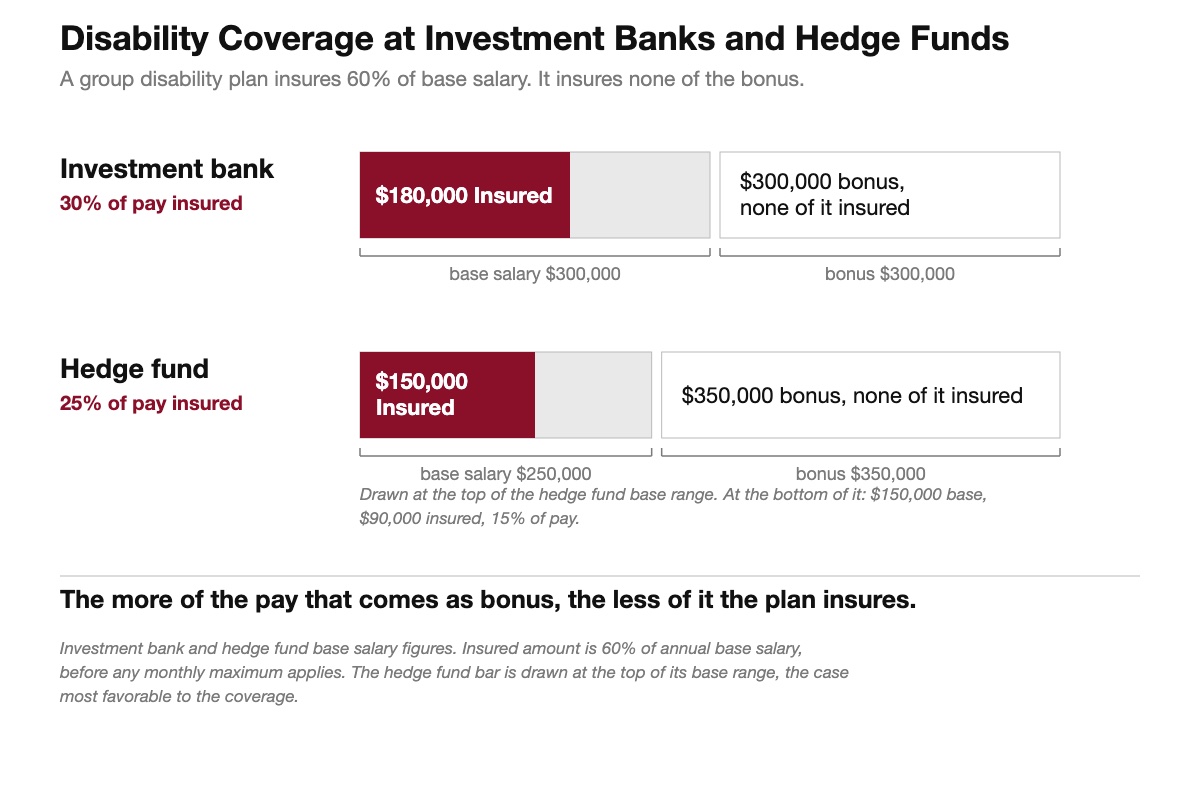
How much of total compensation stays protected depends heavily on role. An investment banker’s year-end bonus is often tied to deal volume and can exceed base salary several times over in a strong year. A portfolio manager or quantitative analyst may be paid largely through incentive compensation linked to performance.
The report lays out a side by side comparison of how the same total compensation insures very differently depending on how much of it arrives as bonus.
Employers with Individual Disability Insurance Coverage
Sorting the census by the business code each employer declares shows this is not a problem confined to one corner of the industry. Securities brokerages, investment banks, commercial banks, credit unions and asset managers each show a similar pattern, a small share of employers offering coverage above the group plan, and a large share offering none at all.
“Since most people on Wall Street are relatively young and they believe they’re invincible, I don’t think most people are really even aware of that,” said Alan Johnson, managing director of Johnson Associates, which publishes semi-annual projections of incentive pay across the financial sector.
The full report, Disability Coverage Stops at Base Salary, lays out how a group disability benefit is actually calculated, how that calculation differs by employer and by role, and what a financial services professional can check in their own plan before this year’s enrollment window closes.