
International Disability Insurance
Disability Insurance for Expats
Expat Disability Insurance and Income Protection
Coverage Terms for Visa Holders and Expats
International disability insurance, including expat disability insurance, means U.S. individual disability policies for people who hold a J-1 or H-1B visa or plan to live outside the United States. Carriers set different terms for visa status, time abroad, and benefits paid overseas, and those terms specify what disability insurance for expats pays after a move.

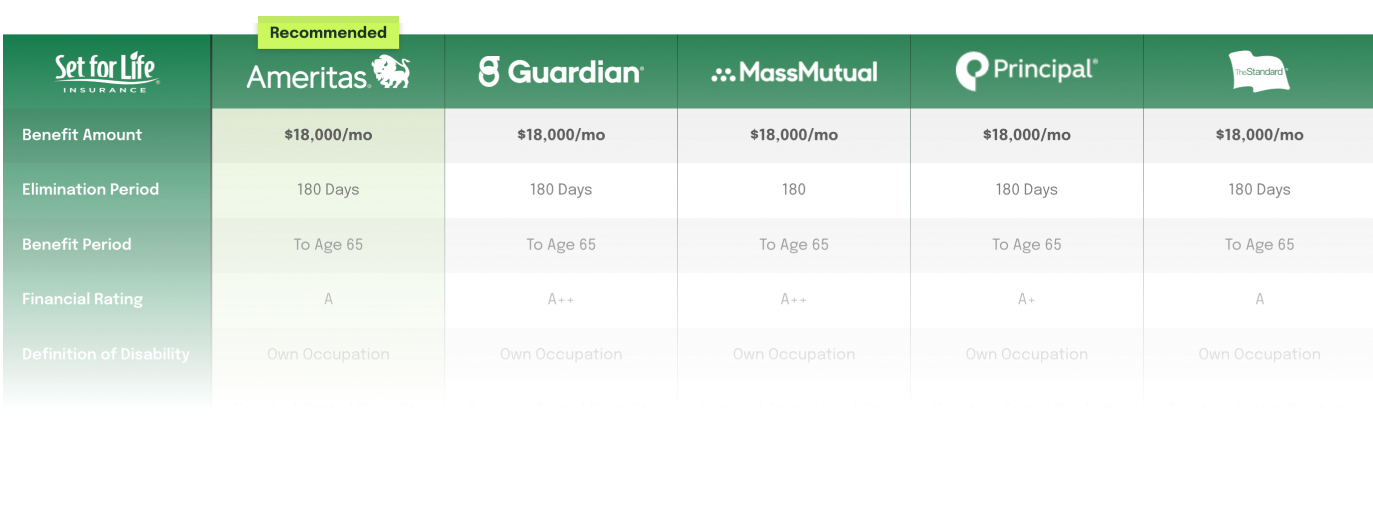
Compare Carriers for International and Expat Disability Insurance
International Disability Insurance: Request a Quote
"*" indicates required fields
International Disability Insurance Quotes
Disability Insurance for Expats Depends on Policy Terms
Disability insurance living abroad depends on the contract, because a U.S. individual disability policy can pay benefits while the owner lives outside the United States, but the contract states how long. Many policies keep benefits limited to 12 months, or to 12 monthly benefits, while the owner lives outside the United States, then suspend payments until the owner returns. Other policies handle time abroad through a foreign travel exclusion rider attached when the policy is issued.
Four provisions in an expat disability insurance policy specify what it pays abroad: how many months of benefits are paid, whether benefits resume when the owner returns to the United States, whether premiums come due again once benefits stop, and how many months a year the owner must spend in the United States for the limit not to apply.
Where the owner lives when a disability starts, and where the owner lives while it continues, can both change what the policy pays. Applicants who may move abroad later can compare disability insurance for expats in a side-by-side quote that lines up these terms before they buy. Many other countries use the wording international income protection insurance, and the question for a U.S. policy owner stays the same: what the contract pays after a move.
Disability Insurance Residence Limits Abroad by Carrier
Policies differ on which countries count as home, on how many months of benefits are paid while the owner lives abroad, and on whether time in the United States each year removes the limit. The table shows what each carrier’s contract language says.
What Each Disability Policy Says About Living or Traveling Outside the United States
 |
Ameritas Ameritas Life Insurance Corp. ICC21 4601NC |
Assurity Assurity Life Insurance Company ICC24 I H2401 |
Guardian Berkshire Life Insurance Company of America ICC16 18ID |
Illinois Mutual Illinois Mutual Life Insurance Company DI105 |
Lloyd’s Lloyd’s via Petersen International Underwriters PDI111521 |
MassMutual Massachusetts Mutual Life Insurance Company ICC15-XLIS-RC |
Principal Principal Life Insurance Company ICC22-800-IDI |
The Standard Standard Insurance Company B180(7/17) |
|---|---|---|---|---|---|---|---|---|
| Residence or travel limit printed in the base contract | 12 months, cumulative over the life of the policy | 12 monthly benefits | None printed | 90 days | None printed | None printed | 12 months, then benefits are suspended | 12 months, aggregate for each period of disability |
| Where the insured can live without triggering the limit | The United States, its territories, or Canada. | The United States, its territories or possessions, or Canada. | No residence or travel limit printed in the specimen. | The United States, Canada or Mexico. The provision refers to being “outside” those countries when the injury or sickness is sustained or continued. | No territory limit printed in the certificate. The Declarations page lists a “Geographical Location” field, which the specimen leaves without a value. | No residence or travel limit printed in the specimen. | The United States or Canada. | The United States or Canada. |
| What the limit is and how it counts The contract’s own counting basis differs. |
While the insured resides outside, benefits are not paid for more than a cumulative twelve months during the lifetime of the policy. | Up to a maximum of 12 Disability Monthly Benefits for any Disability sustained while the insured is residing outside. | Not applicable. | The Maximum Total Disability Benefit Period is limited to 90 days for a total disability sustained or continued while outside. After 90 days, benefits are not paid until the insured returns. | Not applicable. | Not applicable. | Benefits are limited to 12 months during a Continuous Disability, then suspended. | Benefits are not paid for more than an aggregate of twelve months for each period of disability while the insured resides outside. |
| Whether living part of each year at home removes the limit | No such exception printed. | No such exception printed. | Not applicable. | No such exception printed. | Not applicable. | Not applicable. | The limit does not apply if the insured resides in the United States or Canada for at least six consecutive months in each calendar year. | No such exception printed. |
| When the insured returns | ||||||||
| What the contract says happens when benefits have stopped and the insured comes back | The insured may resubmit a notice of claim for consideration to resume benefits under the terms of the policy. | A notice of claim may be resubmitted on return. | Not applicable. | If still totally disabled on return, the remaining benefit period is the Schedule’s maximum less the time already paid. | Not applicable. | Not applicable. | The insured may resubmit a notice of claim for benefits. | The insured may become eligible to resume benefits if all terms and conditions of the policy are satisfied. |
| What the provision says about premiums while benefits are stopped | Not stated in this provision. | Not stated in this provision. | Not applicable. | Not stated in this provision. | Not applicable. | Not applicable. | Not stated in this provision. | Premiums become due beginning on the next monthly premium due date after benefits cease. |
Source: Specimen and sample policies from each carrier. Terms shown are from specimen policy language and are subject to change at underwriting, and riders and state variations change what an issued policy says. Lloyd’s coverage is issued as a certificate rather than a policy. The Illinois Mutual form is a short-form policy sample.
Disability Insurance for J-1 and H-1B Visa Holders
Disability insurance for non-U.S. citizens depends on citizenship status and visa status, which are part of the underwriting application for an individual disability policy. Carriers ask for citizenship, then visa type and duration, meaning how long the visa runs. Permanent residents are generally considered on the same basis as U.S. citizens, sometimes after a minimum period of U.S. residence. Work and exchange visas, including H-1B and J-1, are considered case by case.
Disability insurance for visa holders can also depend on an intent to remain in the United States, a Social Security number requirement, and a U.S. tax return requirement, and some carriers add a non-U.S. citizen questionnaire.
Because underwriters weigh each situation, two applicants on the same visa can receive different offers. The result can be a standard policy, a policy with a foreign travel exclusion rider, or a decline. Disability insurance for residents on a visa involves the same questions about citizenship and visa status when the teaching hospital offers a guaranteed standard issue program.
Disability Insurance Moving Abroad Changes What a Carrier Offers
Plans to leave the United States change what a carrier will offer on expat disability insurance. Time abroad each year can lead a carrier to attach a foreign travel exclusion rider, and a plan to spend most of the year abroad can lead a carrier to decline. Accurate answers at application keep the policy terms matched to how the owner will actually live.
A resident who already owns a policy has a different task: read the foreign residence clause before leaving. A foreign travel exclusion generally limits payment while the owner is abroad, and a claim can continue or restart after the owner returns to the United States for treatment. Owners starting with individual non-cancelable coverage during residency can plan the first policy and the later review together.
A policy with no residence limit in its contract language is not the end of the review. Riders are issued separately from the base contract, so the rider schedule shows what applies. Moving back to the United States has its own terms, and the table above shows what each contract says about benefits and premiums on return.
Who Should Consider International Disability Insurance?
International disability insurance is for people whose visa status or location outside the United States changes how a carrier writes and pays a policy. The situations below show how those terms apply.
Expat Disability Insurance for Americans Moving or Living Abroad
Disability insurance for Americans living abroad depends on the applicant’s residence: U.S. carriers underwrite for people who live in the United States, so applications from expatriates, meaning Americans who already live abroad, get the closest review. Carriers weigh the country, the months spent abroad, and whether the applicant plans to return. A side-by-side quote shows which carriers consider the situation.
Professionals on Work and Exchange Visas
Disability insurance for foreign nationals on work and exchange visas, including H-1B and J-1, is considered case by case. Carriers ask for citizenship, visa type, and how long the visa runs, and some add a questionnaire for non-U.S. citizens. The result can be a standard policy, a policy with a foreign travel exclusion rider, or a decline.
Residents and Fellows on J-1 Visas
Disability insurance for J-1 residents depends on the visa term, since a resident physician or fellow on a J-1 visa trains in the United States for a fixed visa term. Carriers consider J-1 applicants case by case and ask about visa duration and plans after training. This page covers how visa status affects the offer.
Physicians on H-1B Visas
Disability insurance for H-1B physicians covers attending physicians and fellows who work in the United States on a temporary work visa. Carriers weigh visa length, intent to stay, and time abroad. Own-occupation coverage for attending physicians applies once the carrier accepts the visa and residence history.
Physicians Planning to Practice Abroad
Physicians who expect to return home or work in another country face the closest underwriting. A foreign travel exclusion rider or a decline is possible when most of the year would be spent abroad. A policy owned before the move needs a review of its foreign residence clause.
Green Card Holders and International Medical Graduates
Disability insurance for international medical graduates with permanent residence is generally considered like disability insurance for U.S. citizens, sometimes after a minimum period of residence. Time abroad each year and plans to relocate still affect the offer, and the quote form shows how the carriers respond.
International Disability Insurance FAQ
Sources and Industry References
This page draws on publicly available policy language and agency information from these source categories.
- Carrier policy contracts and specimen policies covering foreign residence limits, foreign travel language, and premium terms.
- Carrier underwriting guidelines covering citizenship, visa type, and time-abroad rules.
- Educational Commission for Foreign Medical Graduates covering J-1 sponsorship for international medical graduates.
- U.S. Citizenship and Immigration Services covering H-1B and permanent resident categories.
Last updated: November 3, 2026
Disclaimer
The information on this page is for general informational purposes only and does not constitute legal, financial, tax, or immigration advice. Coverage availability, underwriting terms, and eligibility requirements vary by carrier, citizenship and visa status, time spent outside the United States, health history, and state of residence. Policy terms described on this page are drawn from policy language and carrier underwriting guidelines and are subject to change. A carrier can change or withdraw an underwriting program at any time. Actual policy terms govern in all cases. Set for Life Insurance is a licensed insurance producer.