
A WashU resident who is assaulted at Barnes-Jewish during training, files a disability claim under their WashU GSI policy, and reaches the 90-day elimination period is about to find something in their policy that most of their colleagues have never thought to look for. The act of violence endorsement waives the standard elimination period when disability results from an intentional violent act committed by another person. On a PGY-1 stipend of $69,842, that three-month wait represents approximately $13,500 in take-home pay.
The provision that removes it requires no additional purchase, no rider, and no special request. It was in the enrollment packet from the first day of training.
Barnes-Jewish Hospital is the only American College of Surgeons-verified Level I Trauma Center in St. Louis.
That designation requires 24-hour in-house trauma surgery coverage, comprehensive specialist response capability, and institutional capacity to receive and manage the most severe cases in the region. Barnes-Jewish cares for approximately 14,700 trauma patients each year, holding Level I designation in both Missouri and Illinois. The clinical environment that comes with Level I designation, including the volume of high-acuity patients, the intensity of overnight and emergency calls, and the pace of trauma response, is what makes the act of violence endorsement something more than a policy abstraction for WashU residents at this institution.
What the Act of Violence Endorsement Does in a WashU Resident’s GSI Policy
A standard disability policy requires the insured to satisfy an elimination period before benefits begin. For most residents enrolled through disability insurance enrollment during WashU residency training, that period is 90 days. During those 90 days, a disabled resident receives no benefit payment regardless of what caused the disability.
The act of violence endorsement removes that waiting period under one specific condition. When disability results from an intentional violent act committed by another person, the 90-day elimination period is waived in full. A WashU resident at Barnes-Jewish who is assaulted, sustains a disabling injury, and files a claim under this provision receives benefits beginning from the first day of disability, not the 91st.
The financial question underneath the elimination period is one that Nii Darko, DO, MBA, FACS, a board-certified trauma surgeon and host of the Docs Outside the Box podcast, described after sustaining a hand injury that temporarily prevented him from operating.
“I started to sweat even with a healthy emergency fund because the question is never ‘Do I have savings?’ The question is ‘How long does this go?’” Darko said on the Income Protection Journal Podcast.
The act of violence endorsement answers that question for one specific category of claim: when the cause is intentional assault by another person, the waiting period is removed entirely, and the benefit arrives from day one.
The trigger is precise. Intentional violence by another person, with the cause documented in the medical record: that is the qualifying condition. Accidents, occupational injuries from patient falls, and equipment-related incidents do not qualify.
A needle-stick injury does not qualify. A patient fall during patient transport does not qualify. The endorsement responds to one category of event, and that category is an intentional assault by another person, established through medical documentation.
After more than three decades advising medical residents on disability policy, one observation holds consistently: residents who enroll in the GSI program during orientation sign the forms, return the packet, and do not read the policy document that arrives afterward. The act of violence endorsement is not on the enrollment form and is not mentioned during the enrollment session.
Residents who want to locate it in their policy should search for “act of violence” or, depending on the carrier, “assault and battery waiver.” The label varies. The mechanism does not.
A disability resulting from an intentional violent act by another person waives the 90-day elimination period in a WashU GSI policy. Benefits begin from the first day of disability, not after a waiting period.
What Barnes-Jewish’s Level I Status and the Broader Legislative Context Reveal
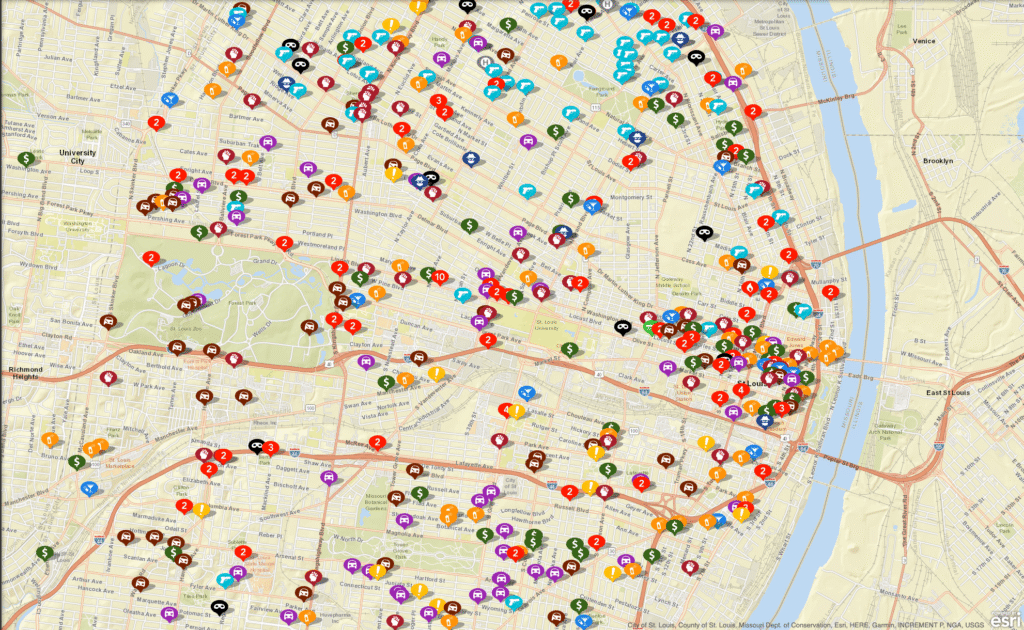
Barnes-Jewish Hospital’s Level I Trauma Center designation, verified by the American College of Surgeons, means Barnes-Jewish maintains the infrastructure and staffing to serve as the definitive care destination for the most critical trauma cases in the St. Louis region, including patients who arrive from vehicle collisions, industrial incidents, and violent events across Missouri and Illinois. The designation carries clinical prestige. It also carries specific occupational realities for the WashU residents who train there.
A 2024 member survey by the American College of Emergency Physicians found that 40 percent of respondents knew of an attack on a healthcare worker at a trauma center that resulted in moderate to severe disability or death. The survey does not identify individual hospitals.
It measures the frequency with which serious violence at Level I trauma centers reaches the specific threshold at which the act of violence endorsement applies: disability caused by an intentional act by another person. The Beryl Institute published a Barnes-Jewish Hospital Workplace Violence Prevention Program case study in October 2024, reflecting institutional recognition of workplace violence as an ongoing concern requiring formal program design and response.
The Save Healthcare Workers Act, introduced in Congress in October 2025, would make assaulting a hospital worker a federal crime carrying a sentence of up to 10 years in federal prison. That legislation represents explicit federal acknowledgment that violence against clinical staff is a documented occupational hazard across hospital settings. The endorsement in a WashU resident’s GSI policy operates entirely outside criminal law.
A conviction is not required to trigger it. An arrest is not required. A completed investigation is not required.
What the claim requires is medical documentation of the disability and documentation that an intentional act by another person caused it. When both are present, the elimination period waiver applies and benefit payments begin immediately.
Residents approaching the Barnes-Jewish program who have not reviewed the GSI disability insurance for medical residents available at this institution face a fixed eligibility window. GSI access is tied to active training status and ends permanently when training does.
For the analysis of how the WashU GME stipend by training year and the St. Louis housing cost benchmark determine what a disability benefit must cover during training, see WashU resident income protection during training.
For the timing considerations that govern the GSI enrollment window for WashU residents, including why the window that opened on Match Day closes at program end, see the GSI enrollment window for WashU residency programs after match.
The act of violence endorsement does not change the monthly benefit amount. It changes when that amount begins to arrive.
For a WashU resident whose annual stipend falls between $69,000 and $79,000, a 90-day elimination period represents three months without income replacement during recovery from a disabling assault. The endorsement eliminates that gap. The document containing it was in the enrollment packet from the beginning.