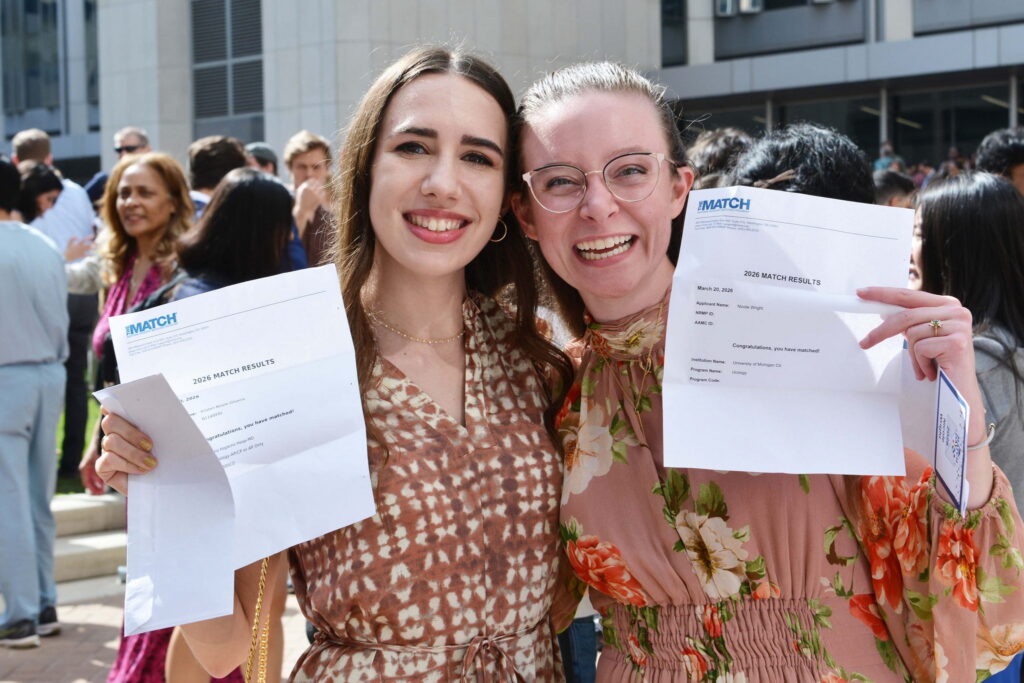
Baylor College of Medicine students left Match Day with something more than residency placements. They walked away with the first clear view of their professional future and the earning power that comes with it. For many, it is also the moment when guaranteed standard issue disability insurance programs become available for the first time.
The annual Match Day ceremony marked another strong year for Baylor, with students placing into residency programs across Texas and at leading institutions nationwide. The event carried its usual mix of celebration and anticipation, with students opening envelopes at the same time as peers across the country and stepping into the next phase of training.
“It’s not called ‘Selection Day,’ it’s called Match Day,” Baylor President Dr. Paul Klotman reminded students. “There is a place that wants you.”
That sense of direction matters for more than clinical training. It also determines when and how physicians can begin making decisions about protecting their future income, including the Baylor resident disability insurance program available to BCM trainees.
Income Protection Decisions Begin Once Residency Is Defined
Before Match Day, most medical students do not have enough information to evaluate disability insurance in a meaningful way. Coverage options are tied to residency programs, affiliated hospitals, and compensation levels that are not finalized until a match is confirmed.
Once a student learns where they will train, several key details become clear at the same time:
- The hospital system or academic institution they will join
- Eligibility for institution-specific programs
- Their starting resident salary
- Access to physician trainee income protection options
That combination allows for the first real evaluation of an individual disability insurance policy.
In many cases, residents become eligible for structured programs tied to their institution, including options that do not require full medical underwriting called guaranteed standard issue insurance. Medical underwriting is the process insurers use to review an applicant’s health history before issuing a policy. Some residency-linked programs simplify or bypass that process, depending on eligibility.
This is why income protection planning tends to begin immediately after Match Day, not before.
Disability Insurance for Baylor Residents Becomes a Long-Term Decision Early
What makes this moment distinct is that the policy structure established during residency does not reset later.
An individual disability insurance policy is designed to stay with the physician across training, fellowship, and attending practice. It is not tied to a single employer, and it does not need to be replaced when a physician changes institutions.
For Baylor graduates entering residency, that means the decisions made early in training can shape how income is protected throughout an entire career.
Policies available during residency often include:
- Own-occupation definitions that protect a physician’s specific specialty
- Future increase options that allow higher coverage later without new medical underwriting
- Residual disability benefits that provide partial income replacement if earnings decline but work continues
- Non-cancelable and guaranteed renewable terms that lock in pricing and contract structure
These features are built into the policy at the time it is issued. They are not added after a physician becomes an attending.
That is what turns an early career decision into a long-term financial framework.
BCM residents who apply for individually underwritten coverage before engaging the GSI window permanently forfeit that simplified option, a sequence that explains why most Baylor residents who lose GSI access during residency do so through application order alone.
Match Day Aligns Opportunity with Long-Term Earning Potential
Baylor’s Match Day results reflected the range of paths ahead for the Class of 2026. About 40 percent of students matched into primary care fields, while others entered programs that can lead to subspecialties, academic medicine, or leadership roles in large health systems.
Over time, those paths can lead to substantial differences in income and responsibility.
Michelle Custead, DVM, DACVIM (Oncology), owner of Ally Veterinary Specialty Center in Waltham, Massachusetts framed the broader pattern on the Income Protection Journal Podcast.
“We very much do need that disability insurance, and a lot of times we have the same amount of loans that a human physician does, so like hundreds of thousands of dollars.”
Michelle Custead, DVM, owner of Ally Veterinary Specialty Center, on the Income Protection Journal Podcast
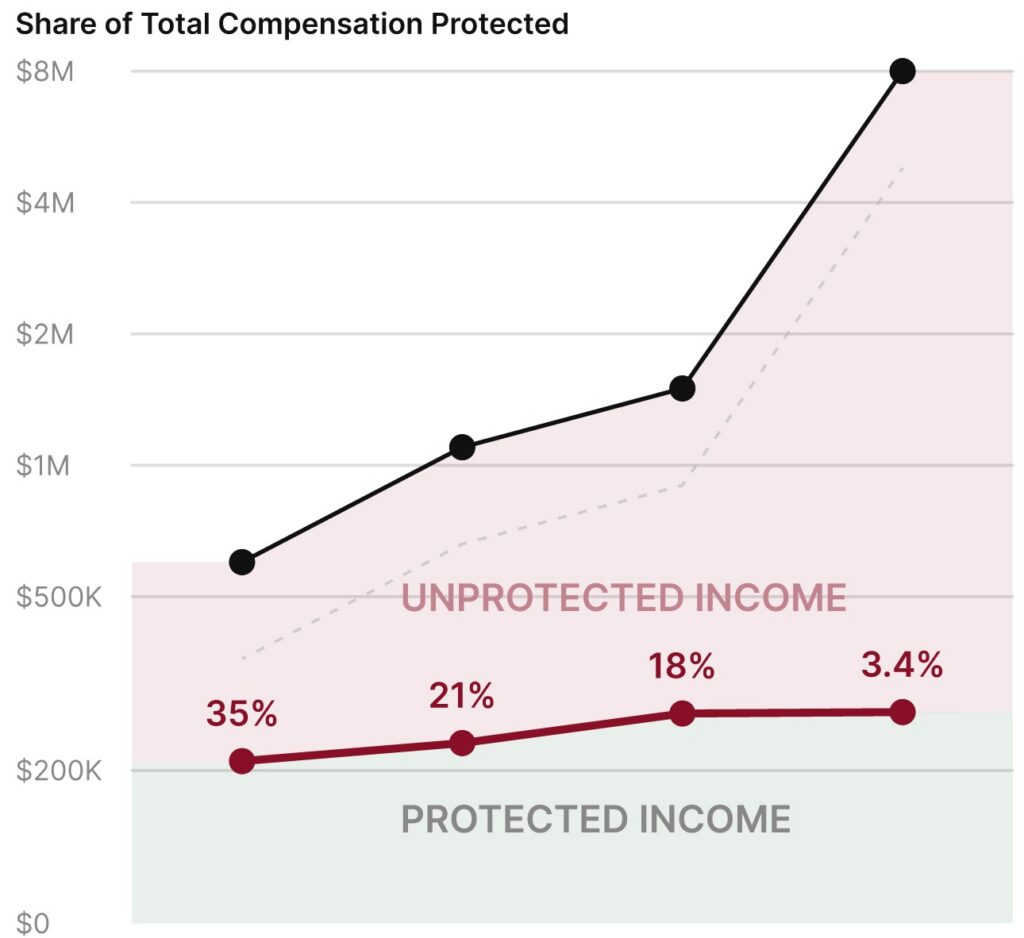
Income protection is designed to follow that growth. A policy purchased during residency typically starts with a modest monthly benefit based on resident income, often between $1,000 and $7,500 per month. Through future increase options, that coverage can expand significantly as earnings rise, in some cases reaching $15,000 per month or more without additional medical evaluation.
This structure allows residents to begin with coverage that fits their current budget while preserving the ability to scale protection later.
The key point is that the foundation is set at the beginning.
A Milestone That Extends beyond Training
Match Day is widely understood as the transition from medical school to residency. It defines where physicians will train and the communities they will serve.
What is less visible is how that same moment opens access to decisions that extend far beyond training.
Once residency is established, physicians can evaluate income protection in the context of their actual program, compensation, and future trajectory. They can structure a policy that reflects where they are starting while preparing for where they are going.
That opportunity does not exist in the same way before Match Day.
For Baylor PGY resident physicians, the day represents both a beginning and a foundation. It marks the start of clinical training and, at the same time, the point at which long-term income protection can first be put in place with clarity.
Match Day also marks the beginning of a finite window. The GSI offer available through BCM GME programs has an enrollment deadline that coincides with active training.
In that sense, Match Day does more than determine where a physician will train. It defines when they can begin protecting what that training is ultimately designed to produce.
Baylor GSI Insurance programs do exist. Residents would be wise to explore them.