Podcast: Play in new window | Download (Duration: 29:31 — 67.5MB) | Embed
Subscribe Apple Podcasts | Spotify | RSS | More
Gretchen Rosenberg has watched agents at her brokerage get sick, stop working, and find out how little income protection they had.
When that happened, colleagues sometimes stepped in. They covered showings, managed contracts, and kept deals from unraveling. What they could never replace was her paycheck.
Five years ago, Rosenberg launched a foundation at Kentwood Real Estate that provides emergency grants to employees and agents dealing with cancer, car accidents, and medical crises. It has made a real difference for a number of people.
It is not income protection for self-employed professionals. And Rosenberg says not enough of her agents carry one.
Rosenberg is President and CEO of Kentwood Real Estate, a luxury brokerage serving communities across Colorado’s Front Range from Denver to Boulder, Fort Collins to Colorado Springs, and into the mountain communities of Summit and Grand counties. Kentwood is Colorado’s exclusive affiliate of Home Services of America and one of the largest residential real estate companies in the country. She started her career as a single mother, spent six months without closing a sale, and built her way to leading one of the state’s largest brokerages over nearly 30 years in a production-only industry.
I sat down with Rosenberg on the Income Protection Journal Podcast to talk about what she has observed across those three decades: what commission earners assume will protect them when something goes wrong, why those assumptions often fail, and what she did about her own income when she was just starting out and could least afford to be unprepared.
Commission Income Has No Floor and No Benefits
Real estate agents are independent contractors. Nearly all of them file 1099s, pay their own taxes, and carry no employer benefits. No health insurance.
No life insurance. No 401K unless they build one themselves.
“The agent is responsible for paying all their taxes, all their insurance,” Rosenberg says. “They have no benefits, they have no health insurance. It’s all on them.”
What makes this particularly difficult is the gap between perception and reality. Television shows about real estate create the impression that agents are uniformly wealthy. The reality, Rosenberg says, is that most agents pay listing marketing costs out of pocket before they know whether a house will sell.
Every deal is speculation. Every paycheck is earned from scratch.
Commission income does not come with a floor. It comes with cycles, market shifts, slow seasons, divorces, and bodies that eventually wear out.
Rosenberg has watched agents navigate all of those. What carries the successful ones through, she says, is almost never what they assumed would.
“They’re out there protecting their clients, and they forget to protect themselves,” Rosenberg says.
What Illness Actually Does to a Commission-Based Income
When I asked Rosenberg what she has seen happen to agents who fell ill or were injured and could not work, her answer was direct.
“I’ve seen some really sad things happen, and it’s because they’re unprepared,” she says. One agent Rosenberg knows lost her home to IRS liens after spending a commission check before setting aside her estimated taxes. Others who were struck by illness had no reserve to carry them through a year of reduced or no income.
The Kentwood Cares Foundation fills some of the gap. But a grant to get through a rough month is a different instrument than coverage that replaces months or years of income when a medical condition prevents someone from working. Most commission earners Rosenberg knows do not have the second thing.
“Not enough think about it,” she says, when I asked whether agents in her firm protect their income. “I think they think, ‘I’ll always be able to sell a house.’”
That mindset is understandable. Real estate attracts people who believe in their ability to hustle. It is also, Rosenberg says, a physically demanding job.
Agents pull up carpet corners at inspections, climb stairs at showings, and work weekends and evenings for clients whose timelines rarely align with anyone’s preferred schedule. The ability to do that work is not guaranteed indefinitely.
What High Earners Assume Will Be Enough
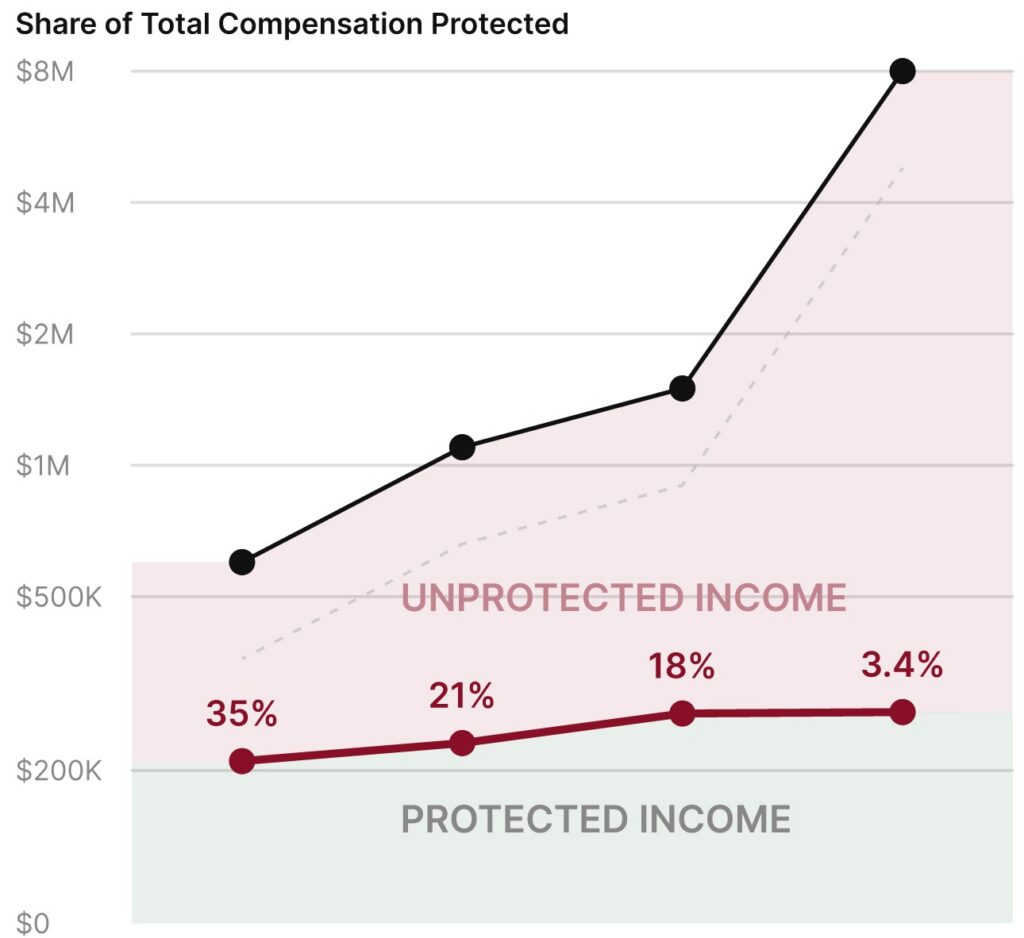
A common belief among high-earning self-employed professionals is that savings or investment portfolios will carry them through any disruption. The most financially disciplined agents at Kentwood, Rosenberg says, do invest well and are genuinely prepared. Most are not those agents.
Housing equity is at an all-time high nationally. But equity does not replace income when someone cannot work. It takes time to access, selling under duress is rarely good timing, and drawing down assets is not the same as having coverage that pays a monthly benefit during a disability.
Rosenberg’s advice to anyone transitioning from a salary into commission-based work is to have at least $25,000 to $30,000 in cash reserve before starting. Even after closing a deal, the commission may not arrive for months.
“That’s why we have insurance,” she says.
I work with self-employed professionals and independent contractors on individual disability insurance built around the income their work generates. The policies that protect commission earners are structured differently from group plans, and understanding those differences matters before something goes wrong.
Rosenberg got her own policy in the early months of her career, when she had no income and no certainty about when she would close her first sale. She was a single mother starting over. She has never needed to file a claim.
“I’m always grateful I have it,” she says.
The specifics of what Rosenberg has seen happen to commission earners who prepared and commission earners who did not, and the conversation she and I had about the gap between earning well and being protected, are in this episode of the Income Protection Journal Podcast. It is a conversation worth hearing before the need arises.