
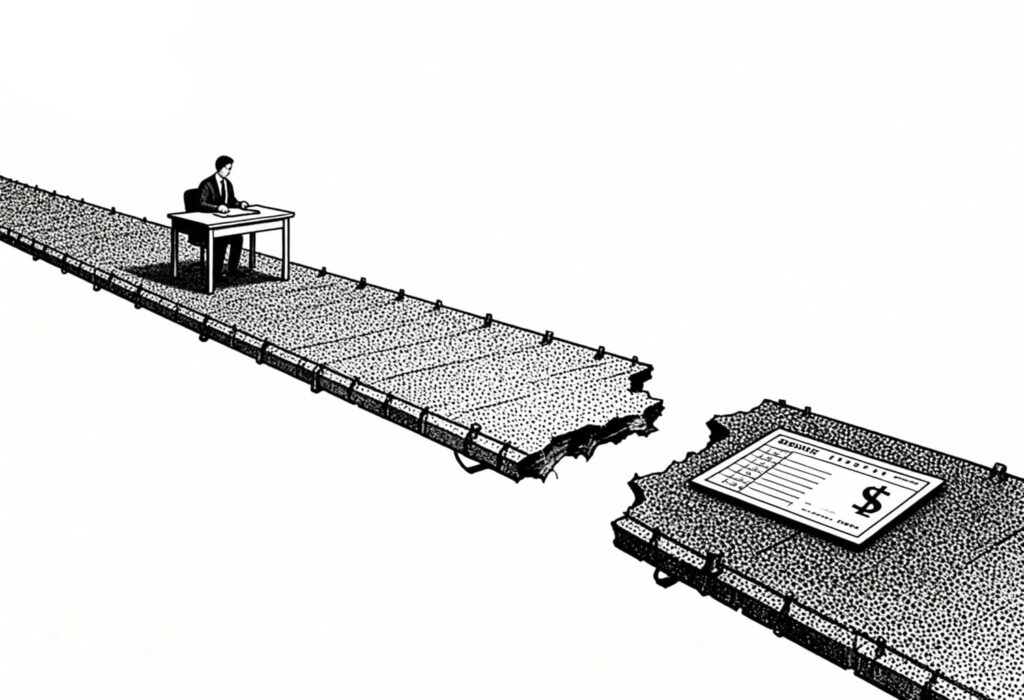
Disability insurance exists for one reason: people get sick or injured, they cannot keep working the same way, and income stops coming in reliably. That is the risk insurers are underwriting. They are not deciding whether someone is “healthy” or “unhealthy.” They are asking whether something in a person’s medical history makes it more likely that paychecks will stop, hours will be cut, or work will become unreliable.
That distinction matters because income usually changes before disability is formally recognized. Employers cut schedules. Productivity drops.
Jobs sometimes end. Disability benefits, by contrast, begin only after a medical condition is clearly identified, documented, and accepted by an insurer or government program. The financial exposure appears first; eligibility comes later.
From an underwriting perspective, medical history matters only to the extent that it predicts future disruption to work. A diagnosis is not evaluated in isolation. What matters is whether a condition tends to flare, progress, or interfere with job duties in ways that make income less predictable over time.
How Underwriting Connects Medical Conditions to Work Capacity
Underwriting evaluates medical information because work capacity, not diagnosis labels, drives disability risk. A condition that rarely affects daily functioning may raise fewer concerns than one that causes unpredictable flare-ups or progressive limitation. Insurers review physician notes, treatment history, and medication use to understand how a condition behaves over time rather than how it is named.
“Chronic conditions such as heart disease, cancer, stroke, and diabetes are costly and major causes of death and disability in the US.” — Centers for Disease Control and Prevention
These conditions often produce long-term functional consequences that extend into working life. From an income-protection perspective, those consequences matter because they increase the chance that work will be interrupted or scaled back. Underwriting attempts to quantify that risk before coverage begins.
Medical history is evaluated alongside occupation for the same reason. A condition that causes minimal disruption in a sedentary role may have very different implications in a job that requires physical endurance, fine motor skills, sustained concentration, or long hours. The financial impact of disability depends on whether a person can perform their specific job duties consistently.
This framework explains why underwriting outcomes vary even among applicants with similar diagnoses. Stability, treatment response, and documented work impact carry more weight than the diagnosis name itself, because those details better predict future income disruption.
What Work-Disruption Data Reveals About Income Risk
Workforce research further clarifies why medical conditions remain central to disability insurance decisions.
“Three in four employees with chronic health conditions (76%) need to manage their conditions during regular work hours,” and “About two-thirds say that, in the past year, they have had to take a break while at work (65%) or take time off (61%) because of their chronic health conditions.” — Harvard T.H. Chan School of Public Health and the de Beaumont Foundation
These findings describe everyday working life for many people, not an exception. Managing symptoms, attending appointments, and recovering from flare-ups all reduce work availability. Over time, repeated interruptions compound into meaningful income loss, particularly for workers whose pay depends on hours worked, productivity, or physical presence.
In clinical practice, physicians see this pattern repeatedly.
“When you think about the biggest diseases now that cause inability to work in the future, I would definitely term it as something called metabolic disease.” — Dr. Isheet Patel, Internal Medicine Physician
Disability insurance underwriting uses medical history as a proxy for this kind of disruption. If evidence suggests that a condition frequently interferes with work, the likelihood of a future claim increases. That probability affects whether coverage is offered at standard terms, modified terms, or with specific limitations tied to the condition.
Underwriting is prospective by design. The goal is not to evaluate past medical expenses, but to anticipate future work interruption. Public research on chronic illness and work absence provides a statistical backdrop for these decisions, grounding them in observed patterns rather than speculation.
How Medical Evaluation Translates Into Coverage Outcomes
Underwriting outcomes differ because medical history affects income reliability differently across occupations and over time.
A standard decision means the insurer approves coverage without added cost or restrictions, indicating that medical history does not appear to raise income-interruption risk beyond what is expected for the broader working population.
A rating means coverage is approved at a higher cost, reflecting a higher estimated chance that illness or injury could interfere with work and trigger a claim.
An exclusion removes coverage for disabilities caused by a specific medical condition while leaving the rest of the policy intact. If a disability later arises from an unrelated cause, income replacement may still apply.
A decline occurs when medical information suggests a level of income-interruption risk that cannot be balanced through higher premiums or targeted exclusions.
Across all outcomes, the same rule applies: underwriting translates health history into estimates about future work disruption, and those estimates shape how income protection is structured.
Disability insurance exists because illness and injury do not affect workers evenly, and public or employer programs often replace only a portion of lost earnings. By evaluating health history upfront, disability insurance attempts to account for those risks before income is disrupted, translating broad public health patterns into individual coverage decisions.