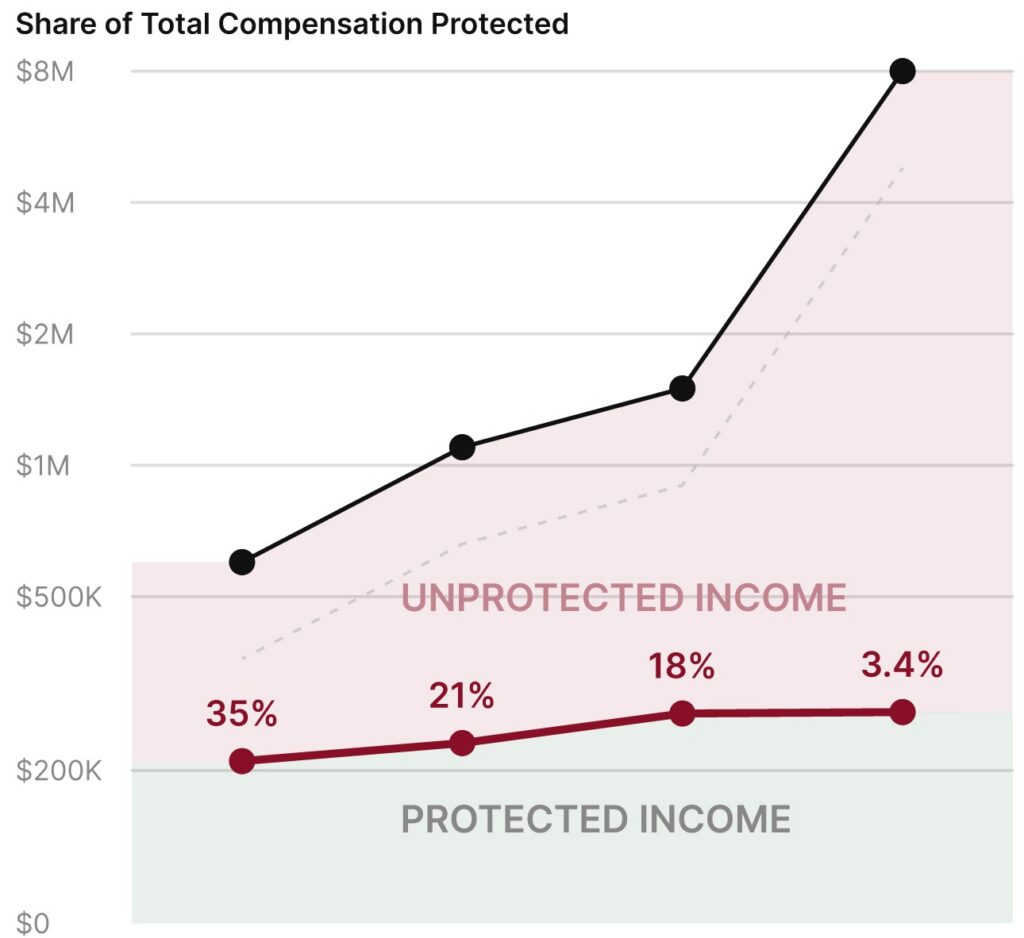

Physician disability Insurance is often discussed as a single product, but its financial meaning changes as a doctor’s career progresses and income risk takes new forms. During training, the concern is protecting future earning power.
Later, the focus shifts to replacing active income that supports households, debt, and long-term plans. Those shifts often occur faster than insurance coverage changes, creating gaps that only become visible after illness or injury disrupts work.
Physicians rely on earned income more than most professionals. Clinical work usually stops entirely when health fails, and replacement income does not arrive automatically. “Physicians with a new disability often have to cope with not only the loss of function but also sudden and significant income loss,” while facing added costs for treatment and rehabilitation, Dr. Cathy A. Churgay and colleagues report in the American Academy of Family Physicians.
The consequences of that income loss vary widely depending on career stage. A resident with modest earnings faces a different disruption than a mid-career surgeon with a mortgage, practice overhead, and dependents.
Disability coverage that appears adequate early on may no longer reflect how income is earned or how much is at stake. Those differences explain why disability insurance cannot be understood as static across a physician’s working life.
Understanding how income protection shifts over time helps clarify why coverage choices made early can echo decades later. Each phase of a physician’s career brings a different exposure to income interruption, and disability insurance plays a distinct role at each point. The following sections trace how that role changes from training through retirement, and where financial strain most often emerges.
Training Years and Early Career: Protecting Future Earnings and First Paychecks
During medical school, residency, and fellowship, physician income is limited, but future earning potential is substantial. At this stage, disability insurance is less about replacing current pay and more about safeguarding the ability to earn a professional income later. Some policies allow coverage based on anticipated earnings, which ties income protection to career trajectory rather than stipend level.
Access matters most in these years. Underwriting standards are generally more favorable earlier in life, and health changes that occur later can restrict options.
Once training ends, eligibility for simplified or guaranteed programs often closes, shifting disability insurance from an opportunity issue to a cost and qualification issue. That shift can occur before physicians fully understand the long-term role coverage will play.
Contract language also carries lasting consequences. “Professionals must pay careful attention to the definition of disability found in their policies because it ultimately determines how any claim for benefits will be judged,” the American Medical Association notes, emphasizing how definitions agreed to early shape outcomes years later.
As physicians move into early attending roles, income rises sharply and becomes more complex. Salary is often joined by productivity bonuses, call pay, or partnership tracks.
Disability insurance begins to function as direct income replacement rather than future protection. Coverage that does not reflect how earnings are structured can leave meaningful portions of income exposed.
Definitions of disability also take on greater importance in early career. Specialty-specific work means that the inability to perform certain procedures can end a physician’s primary income even if other work remains possible. Policies that distinguish between specialty duties and general employment become central to how income protection operates during this phase.
Mid-Career Physicians: Peak Income and the Cost of Interruption
Mid-career often brings peak earnings along with peak financial obligations. Mortgages, education costs for children, and retirement savings all depend on consistent income.
At this stage, disability insurance is closely tied to preserving financial stability rather than preventing hardship alone. Income interruption can ripple across long-term plans built over years.
The nature of disability risk also changes. Claims in mid-career are more likely to involve chronic illness or progressive conditions rather than acute injury.
Partial loss of capacity can reduce income without eliminating the ability to work entirely, making the structure of benefits more consequential. Coverage that only responds to total disability may fail to align with how income loss actually occurs.
The actuary who prices this risk names the age factor directly.
“As you get older, you get into your 50s, the impacts of old age can become disabling events as well. It’s father time catching up with you, and you can’t do the things that you could do when you were 25.”
Andy Schafer, vice president of Workplace Benefits Solutions at Principal Financial Group, on the Income Protection Journal Podcast
Cost becomes a visible factor as well. Premiums generally rise with age, and policy enhancements can be harder to secure after health changes.
Disability insurance that was sufficient earlier may no longer match earnings, but expanding coverage later can be constrained by underwriting and affordability. This tension places mid-career physicians at a crossroads between rising exposure and limited flexibility.
Despite higher incomes, reliance on earned income remains high in mid-career. Assets may be growing, but they often remain tied up in retirement accounts or illiquid investments. Disability insurance continues to serve as a bridge that keeps long-term plans intact when work is interrupted.
Late Career and Retirement Transition: Income Protection as a Narrowing Window
As physicians approach retirement, disability insurance can appear less relevant, but income risk does not disappear. Many continue practicing beyond traditional retirement ages, either part time or in reduced roles. Health risks increase with age, even as options for modifying coverage narrow.
Policy terms become especially important in this phase. Benefit periods, age limits, and renewal provisions determine whether income protection extends through the final working years. Physicians who experience health changes late in career may find that existing coverage is the only protection available.
Disability insurance at this stage functions less as growth protection and more as income continuity insurance. Even short disruptions can affect retirement timing or force early withdrawals from savings. The financial impact may be compressed into fewer years, but the stakes remain significant.
Across all stages, the central theme remains consistent. Income protection does not mean the same thing throughout a physician’s career.
Coverage that aligns with one phase may not address the realities of the next. Understanding how disability insurance interacts with income at each stage clarifies why gaps often appear only after work stops and earnings do not.
Disability Insurance Across a Physician’s Career [VIDEO]